Pacific Harbor Seals
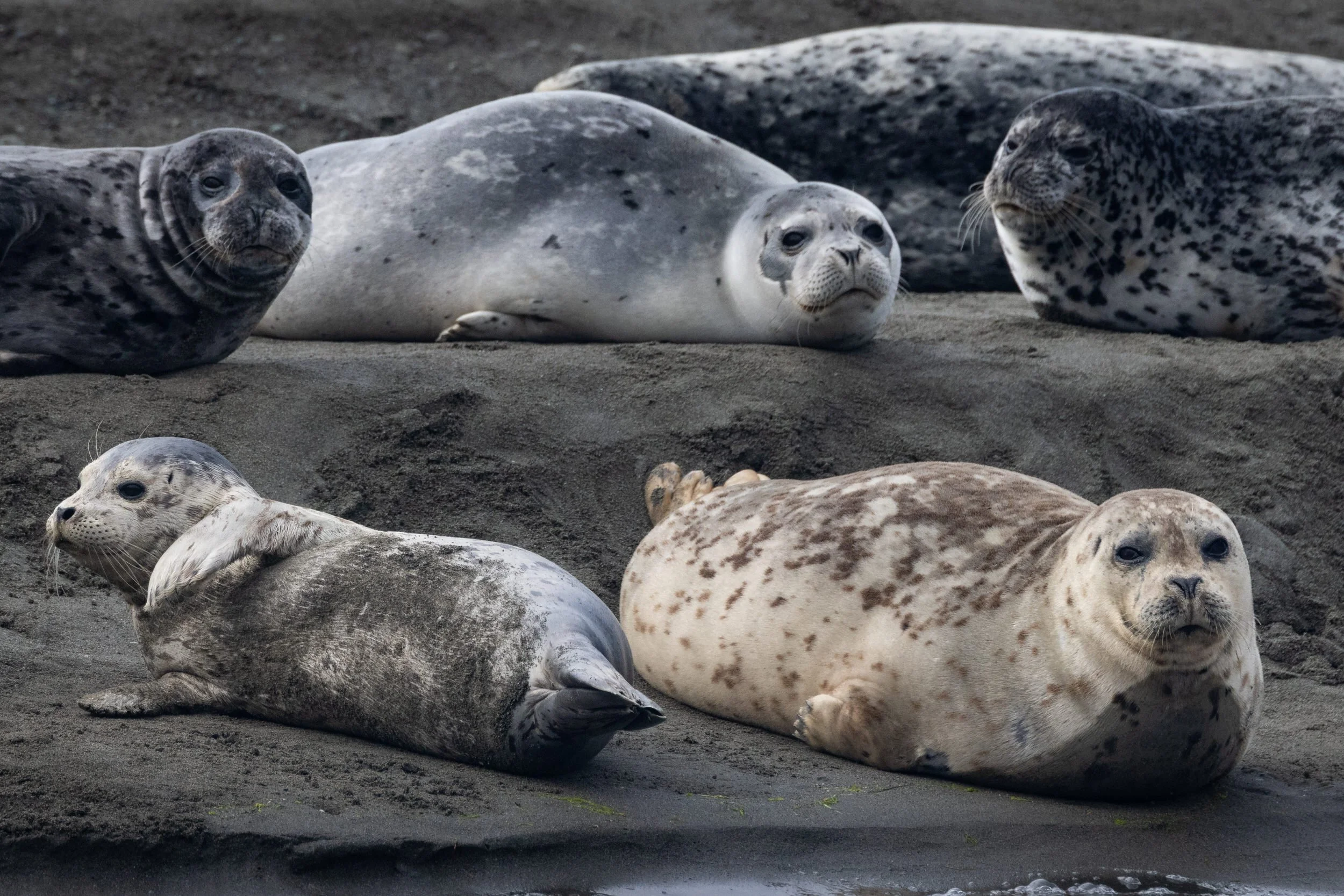
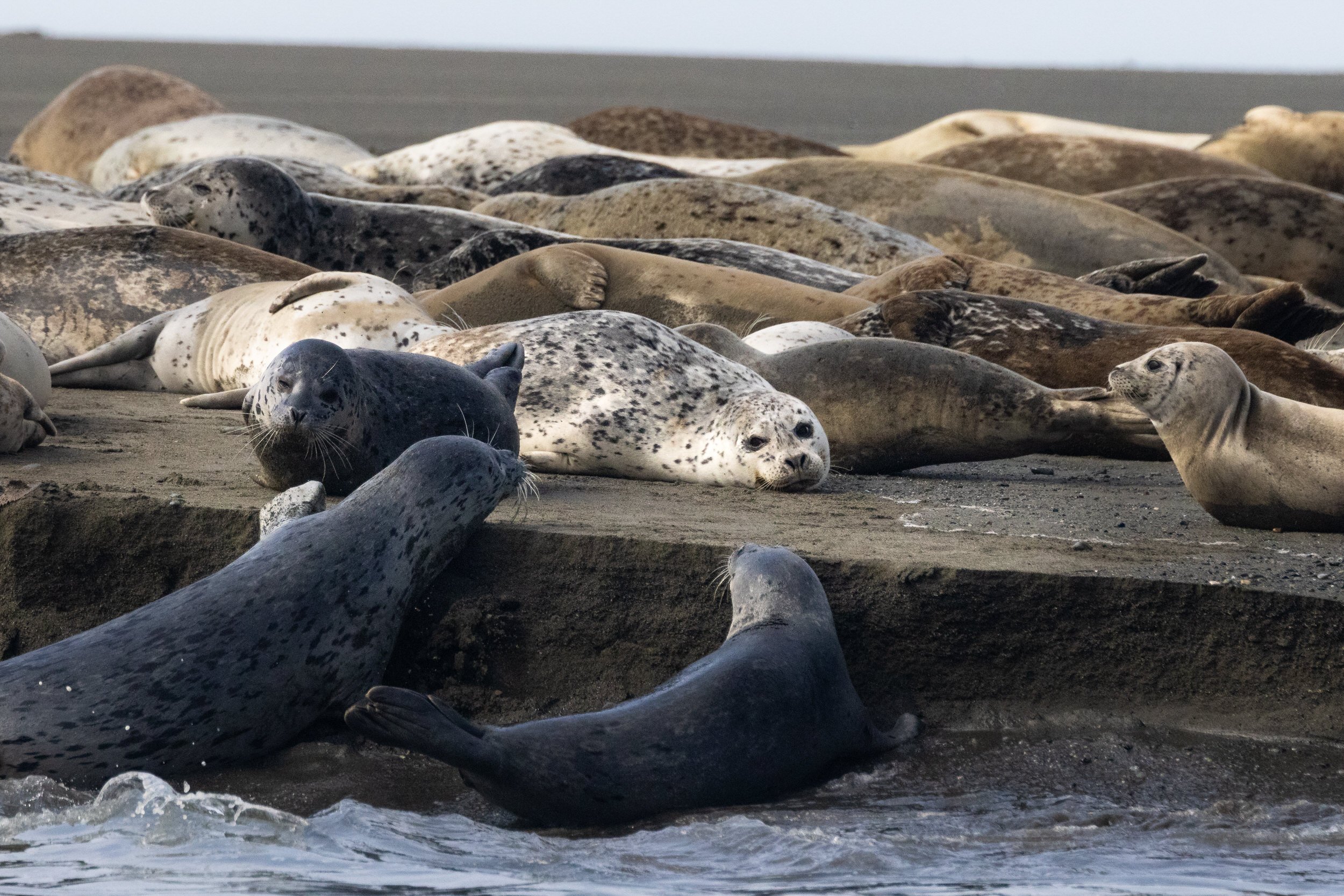
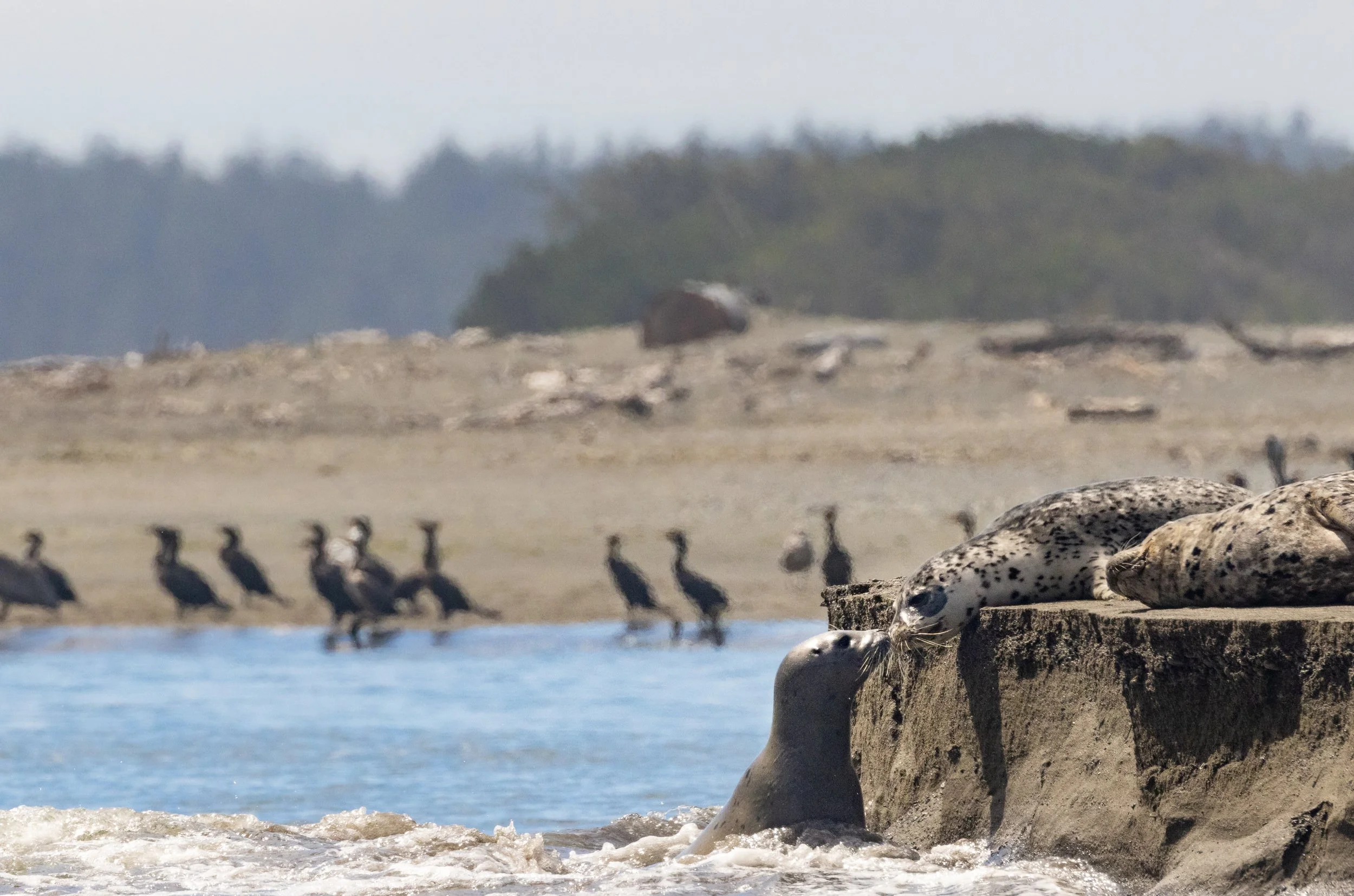
1. Harbor seals live north of the equator. In the Pacific Northwest, they are found along the coast in areas ranging from Alaska to Baja California, Mexico. They prefer to live along nearshore coastal waters where they can come in and out of the water easily.
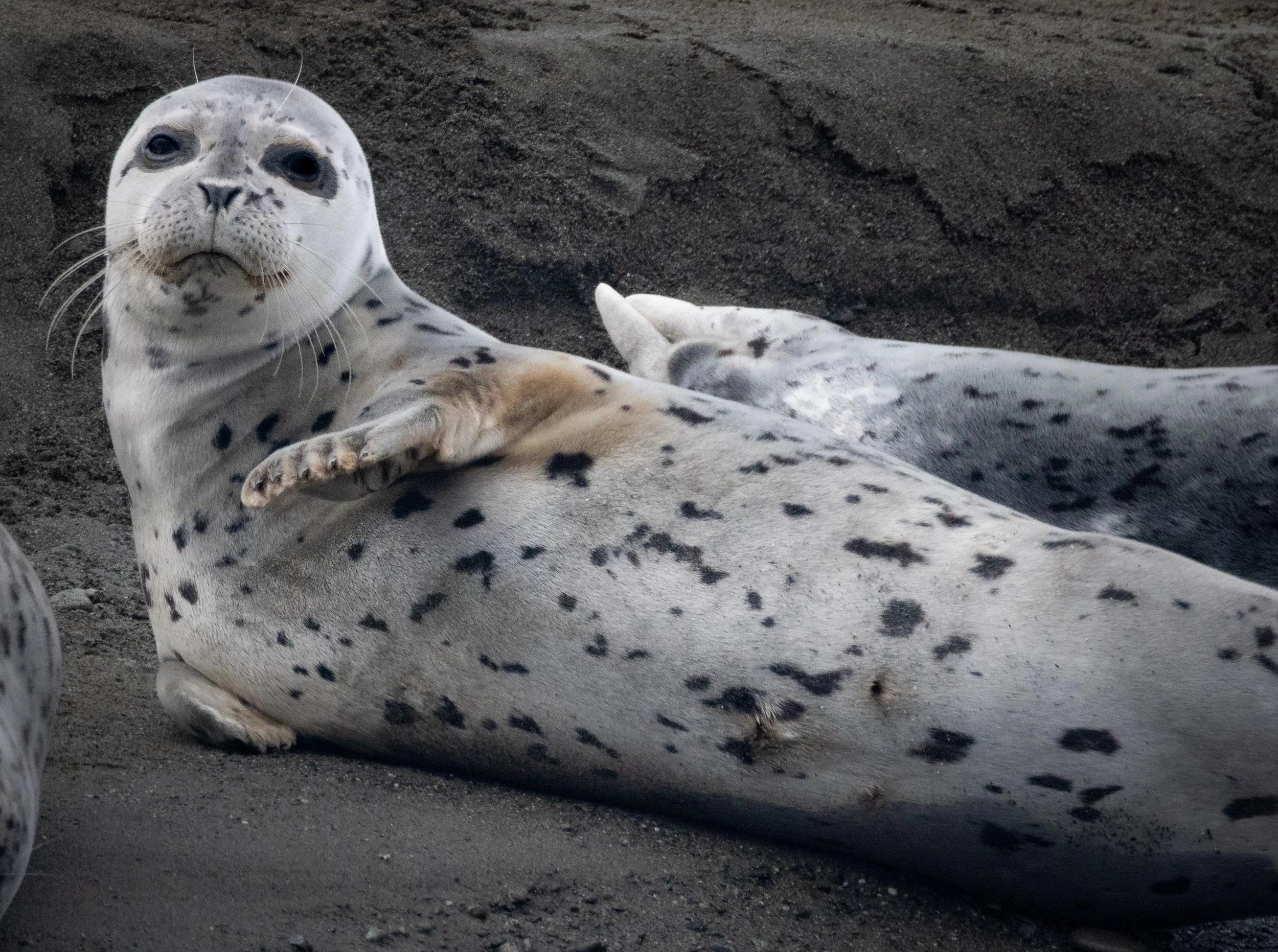
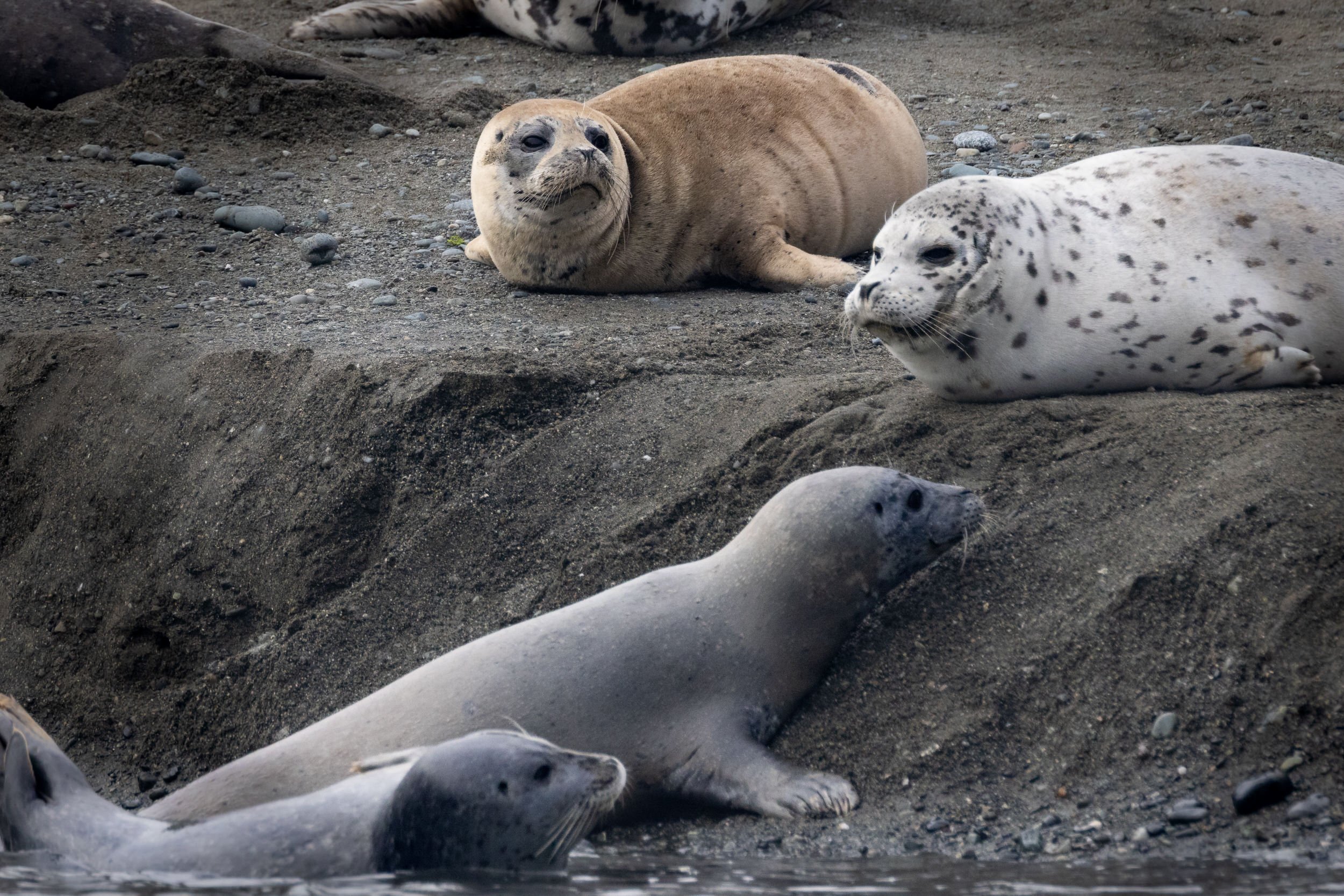
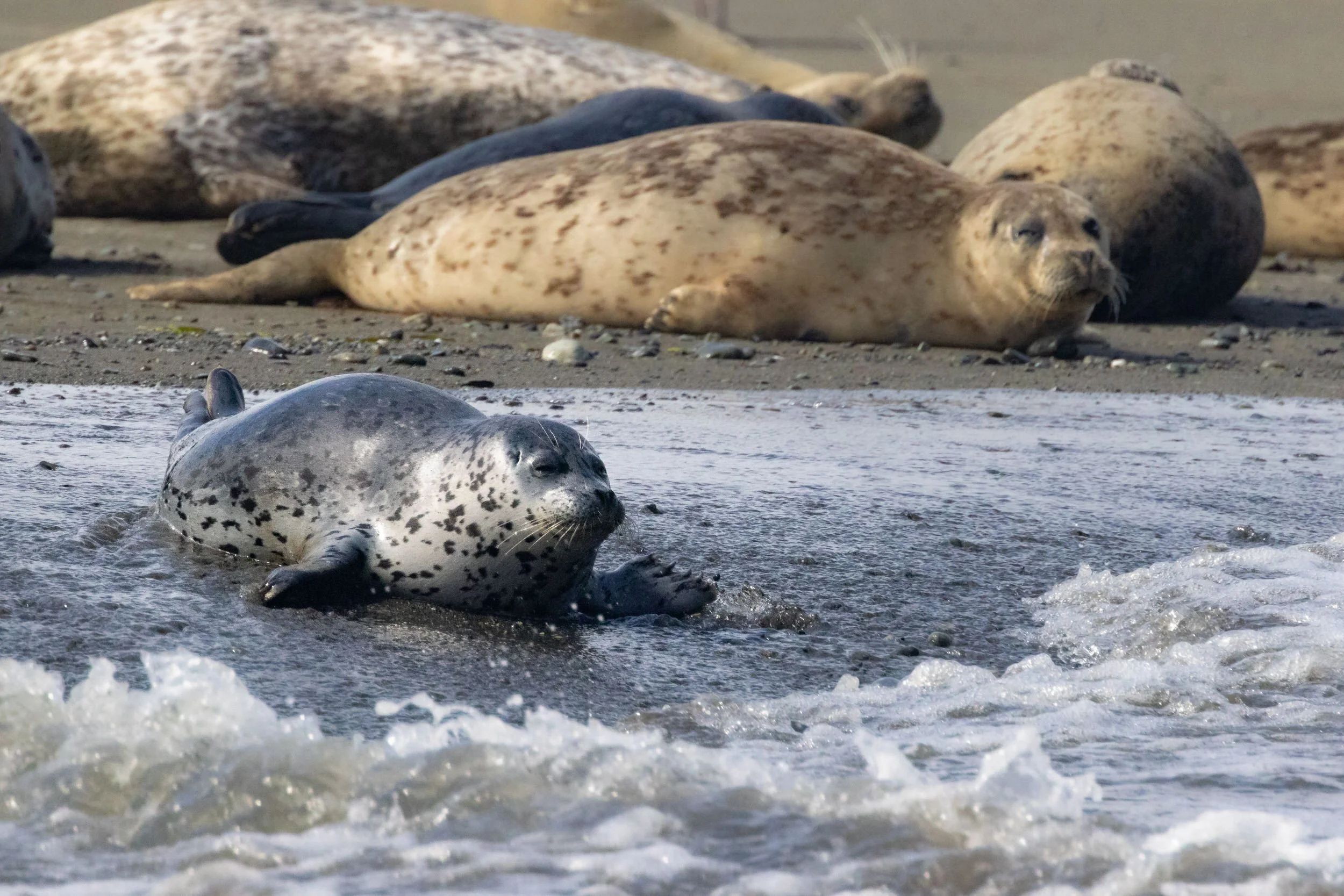
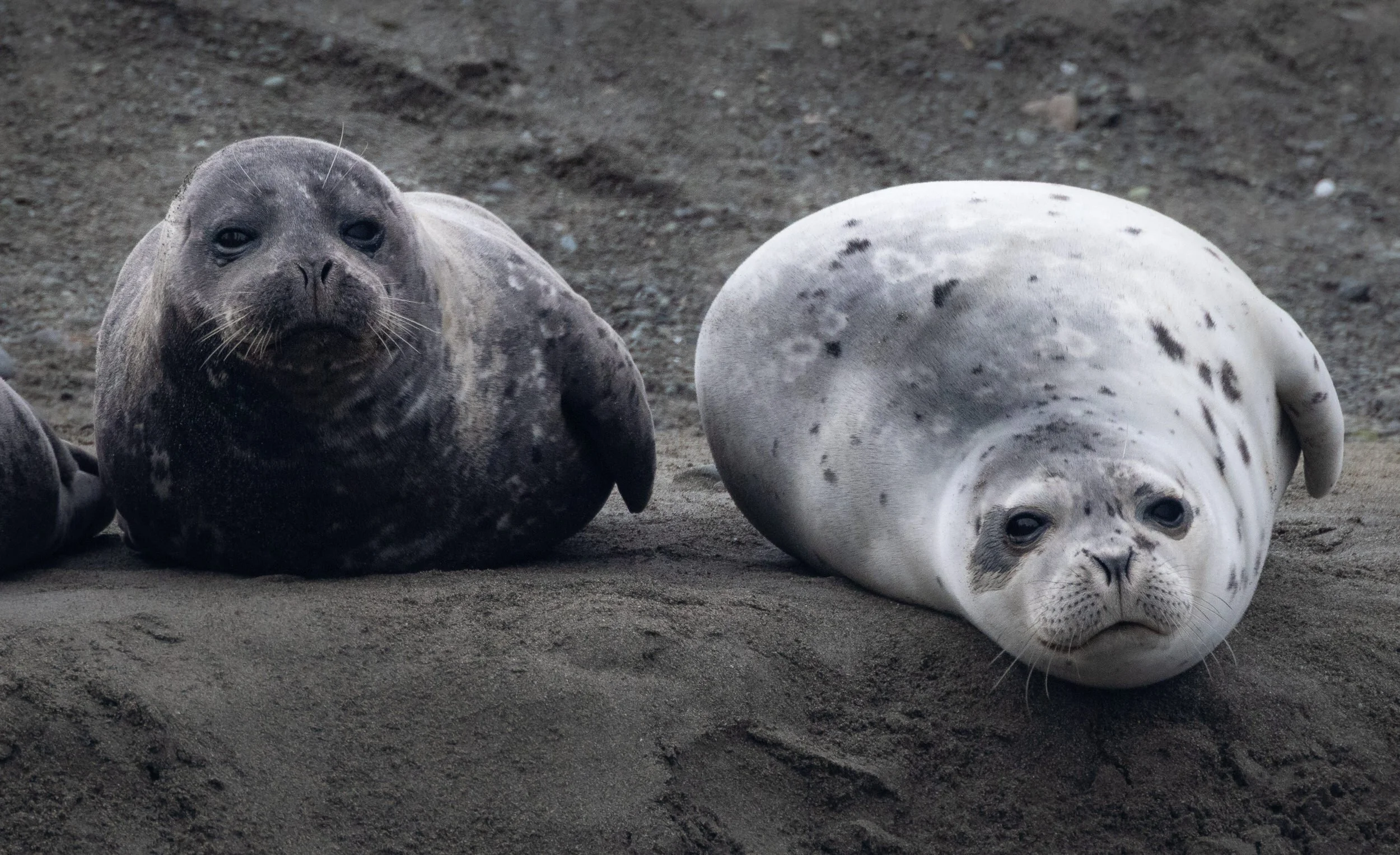
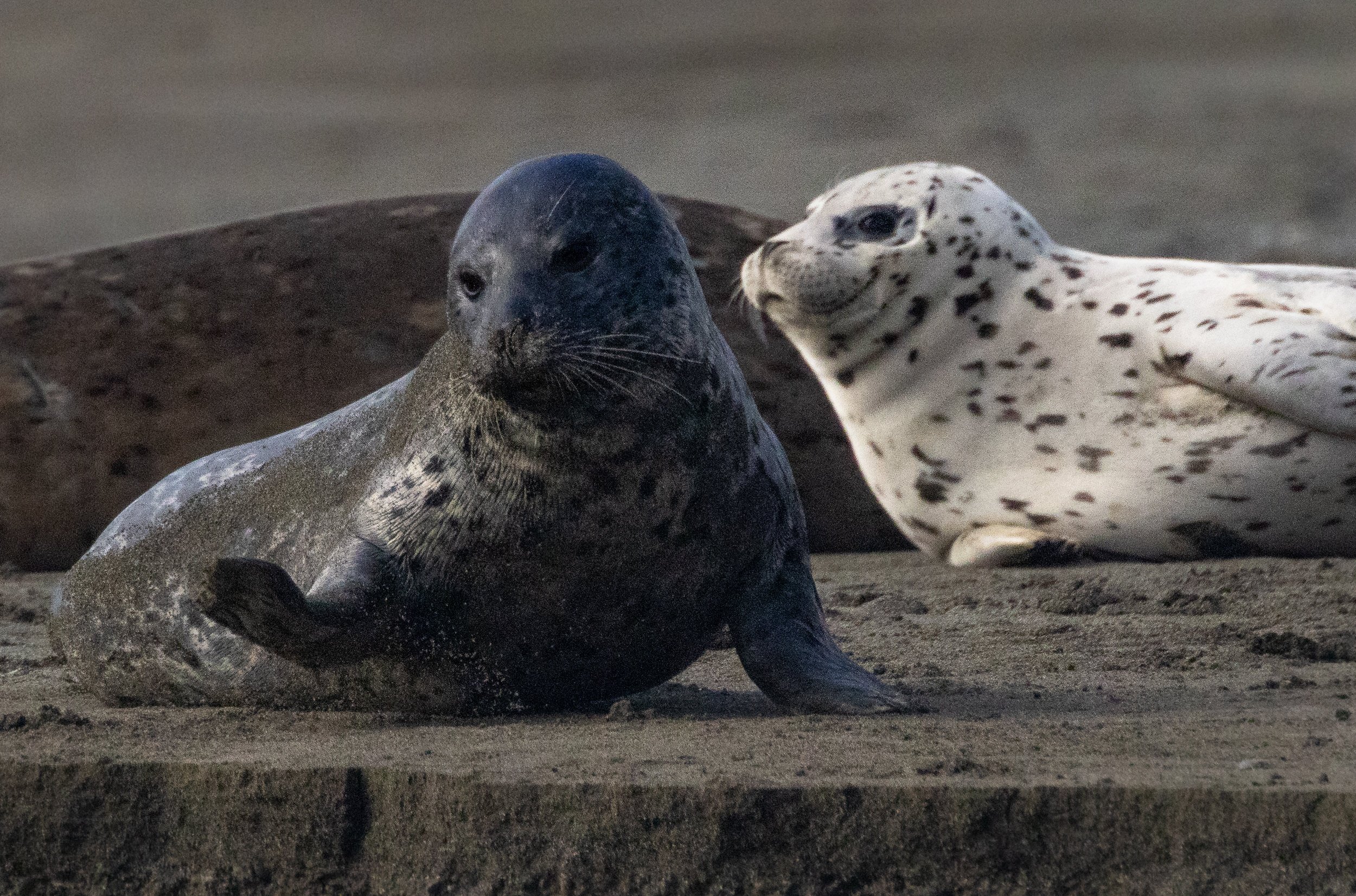
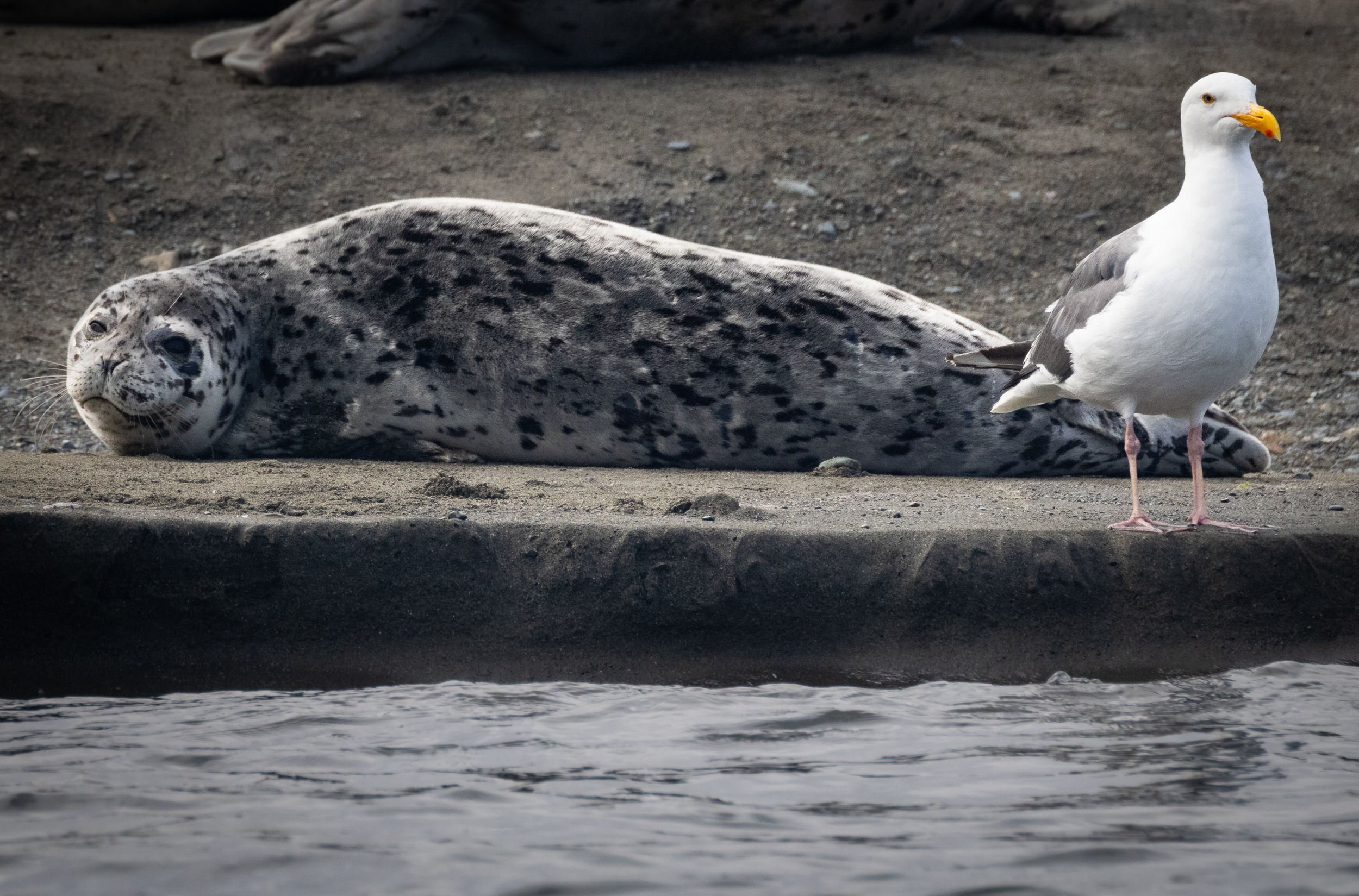
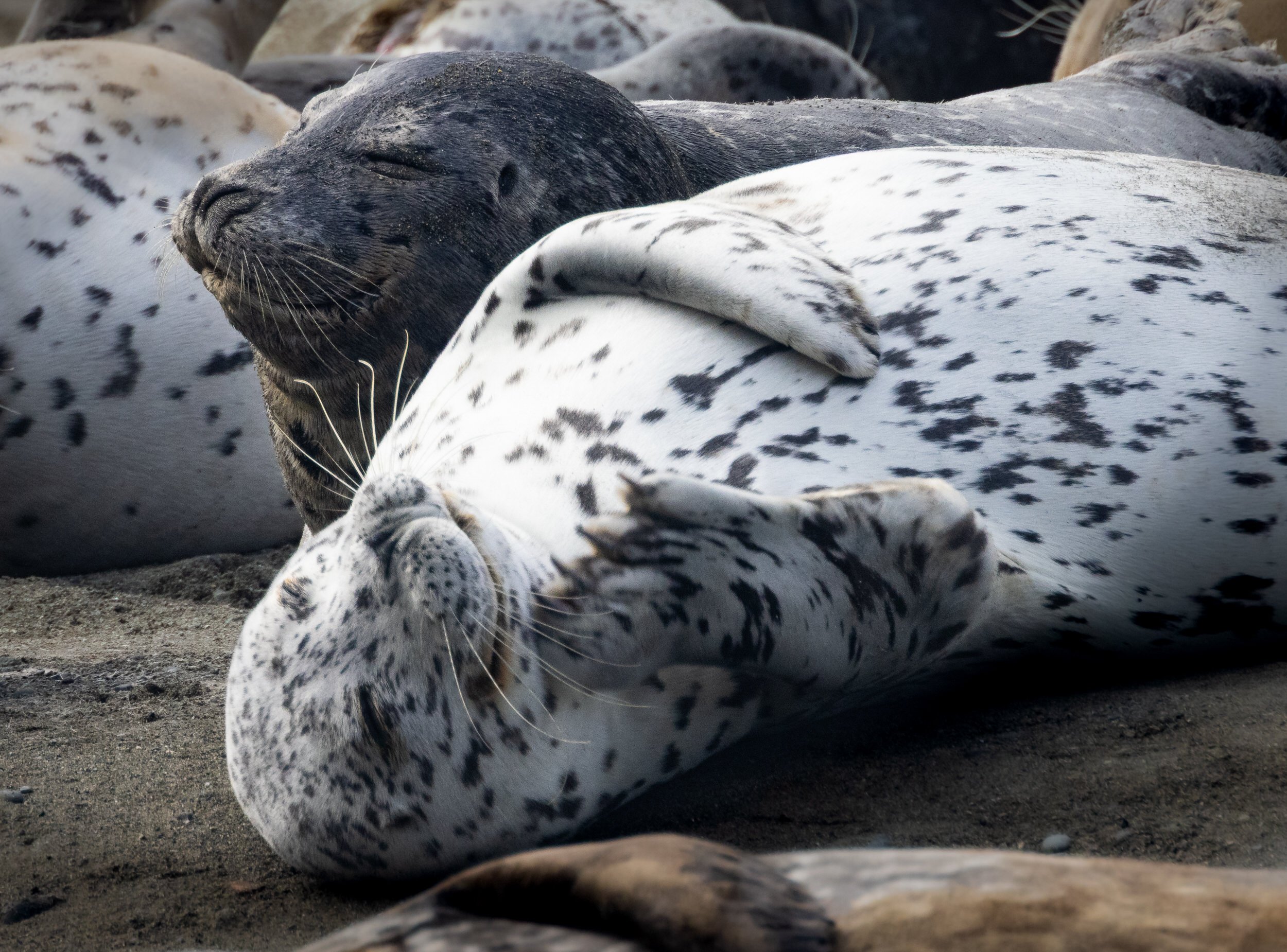
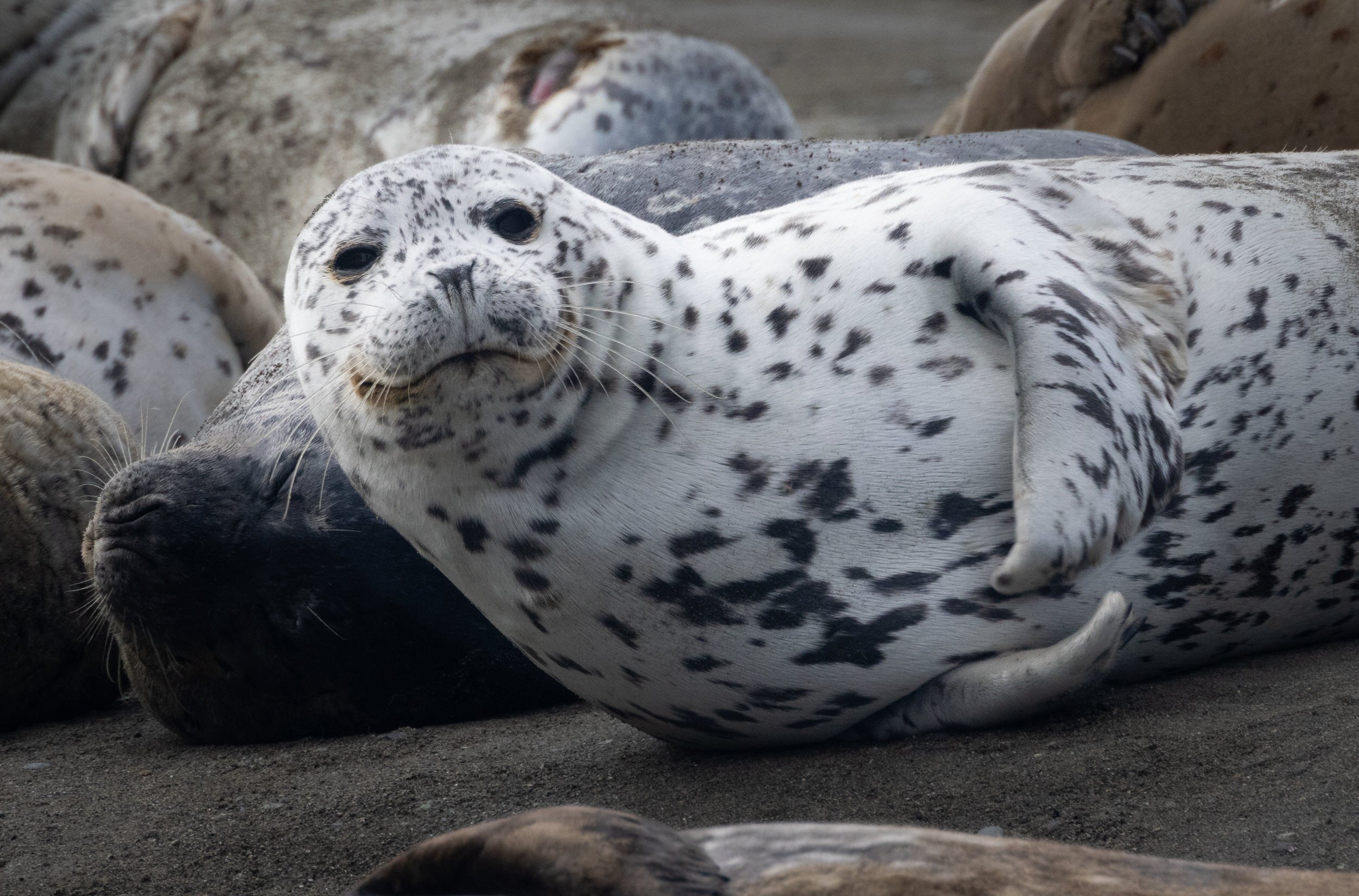
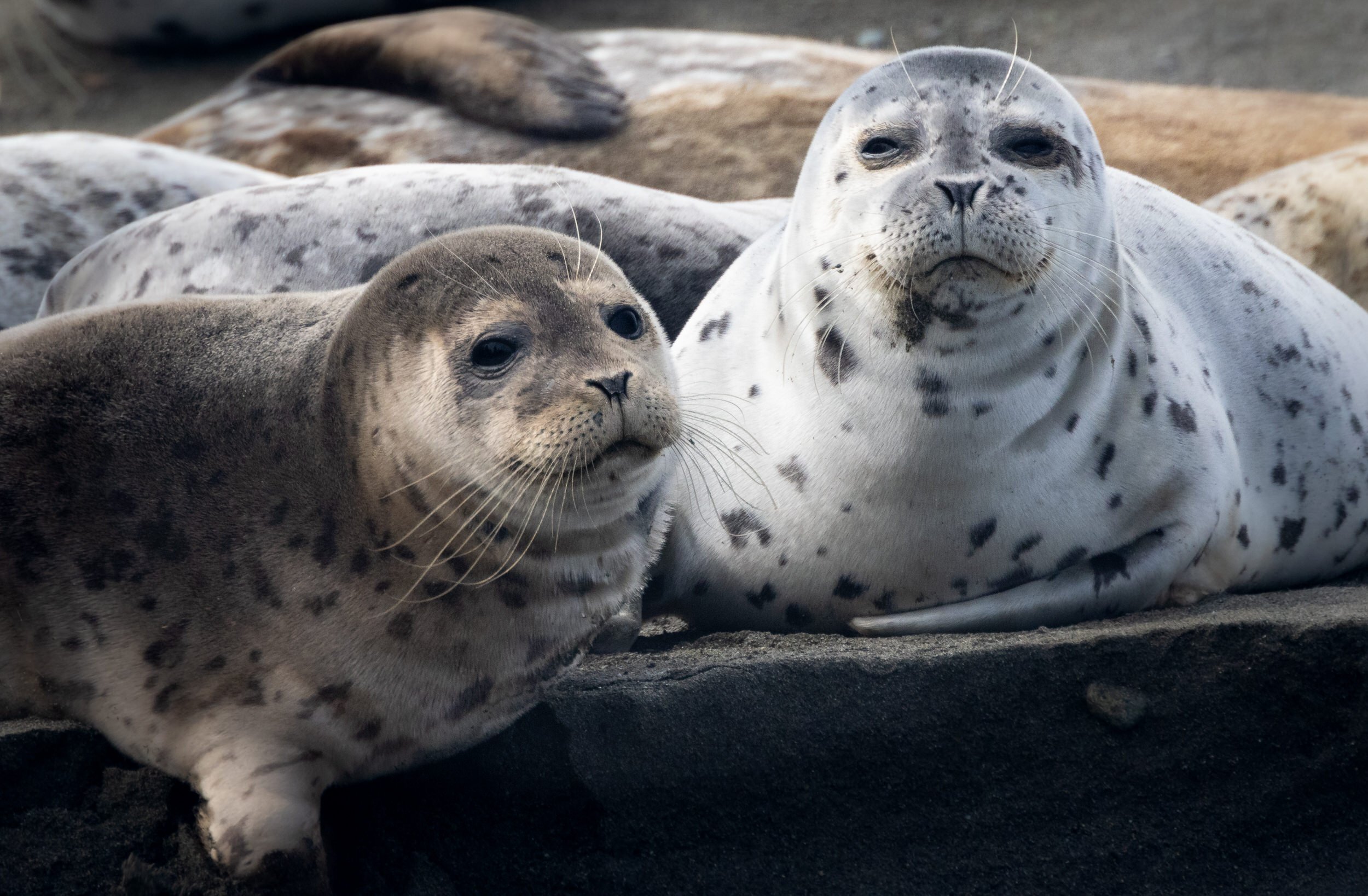
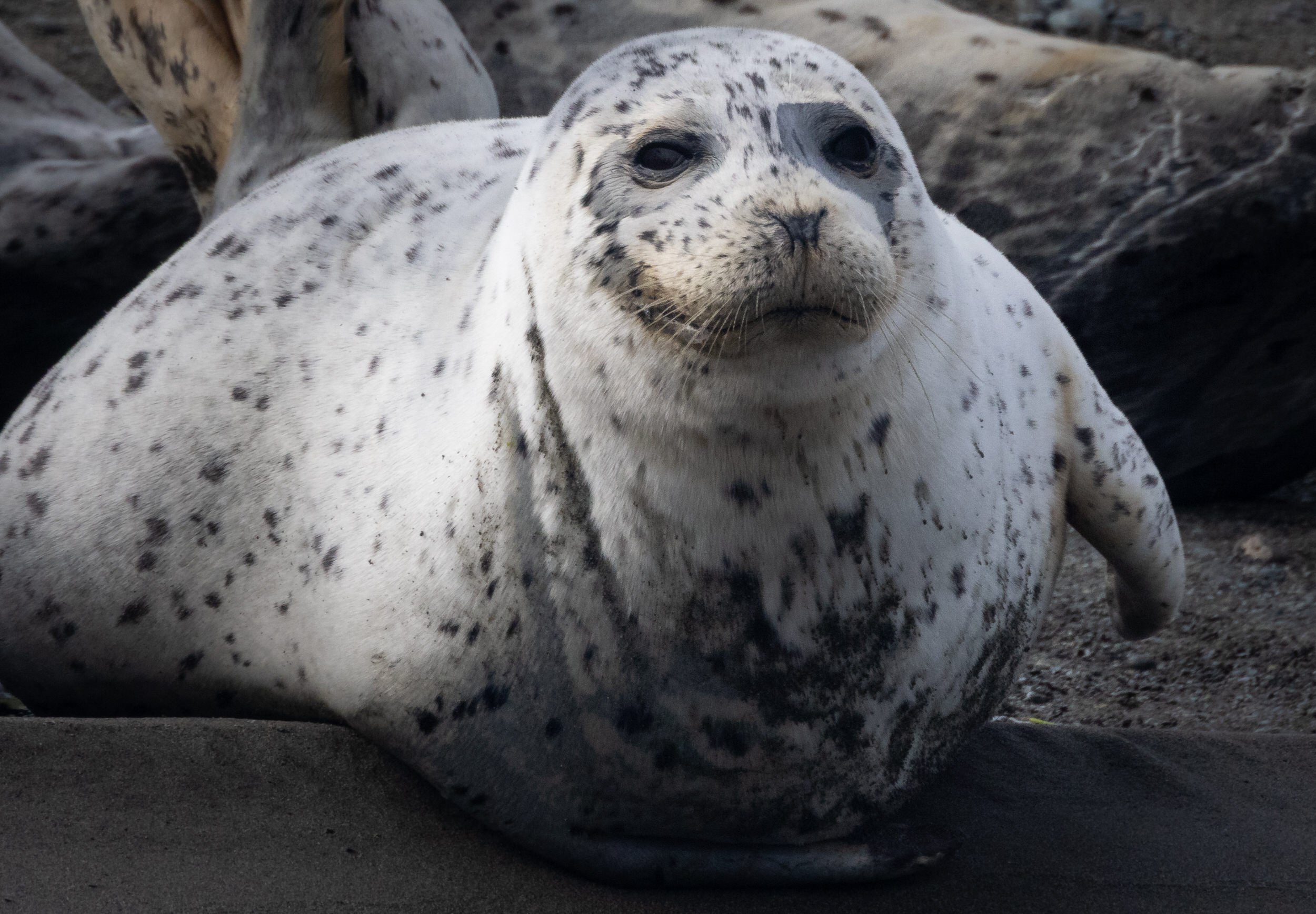
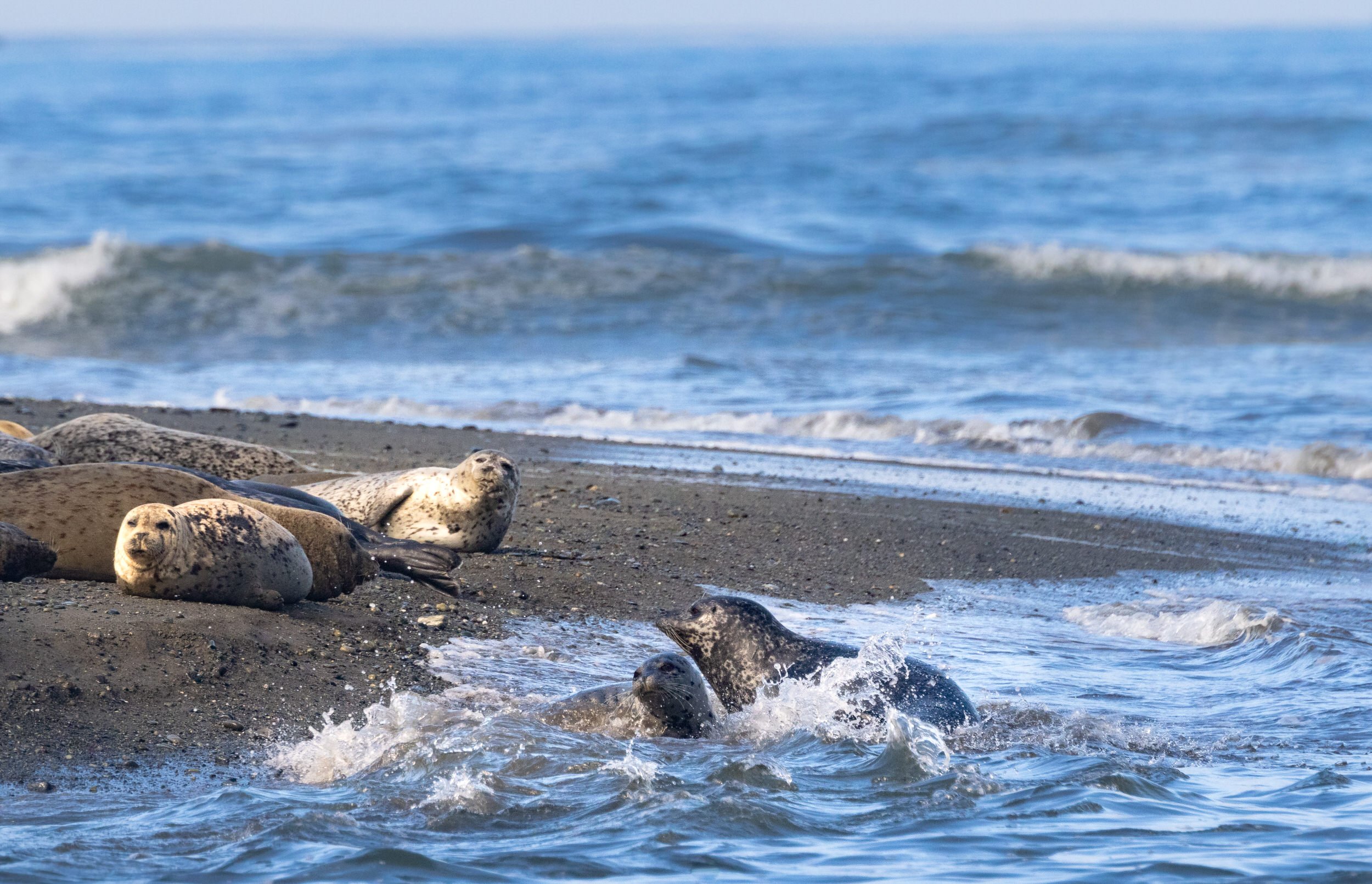
2. Harbor seals vary in color. Pacific harbor seals have spotted coats in shades ranging from white, silver-gray, to dark brown or black. They are covered with short, stiff, bristle-like hair.
3. Harbor seals have a metabolic rate higher than land mammals of similar size. This allows them to generate a greater amount of body heat.
4. They have a thick layer of blubber, which insulates them from heat loss and provides a heat gradient from the body's core to its skin. The seal's skin can be similar in temperature as the surrounding water while its core temperature stays around 100 deg F. The blubber can also be metabolized for energy.
5. Harbor seals weigh about 20-24 pounds at birth and quickly gain weight during a month-long suckling period. They can reach 5-6 feet in length. Average weight for adults is about 180 pounds. Males are larger than females and can weigh up to 285 pounds.
6. Harbor seals eat fish and invertebrates. They keep foraging efforts low by eating what is abundant and easily caught.
7. Harbor seals have a keen sense of hearing, but they lack an external ear flap. Only a small opening to the ear canal is visible on each side of their head. This distinguishes them from other pinnipeds, such as fur seals and sea lions.
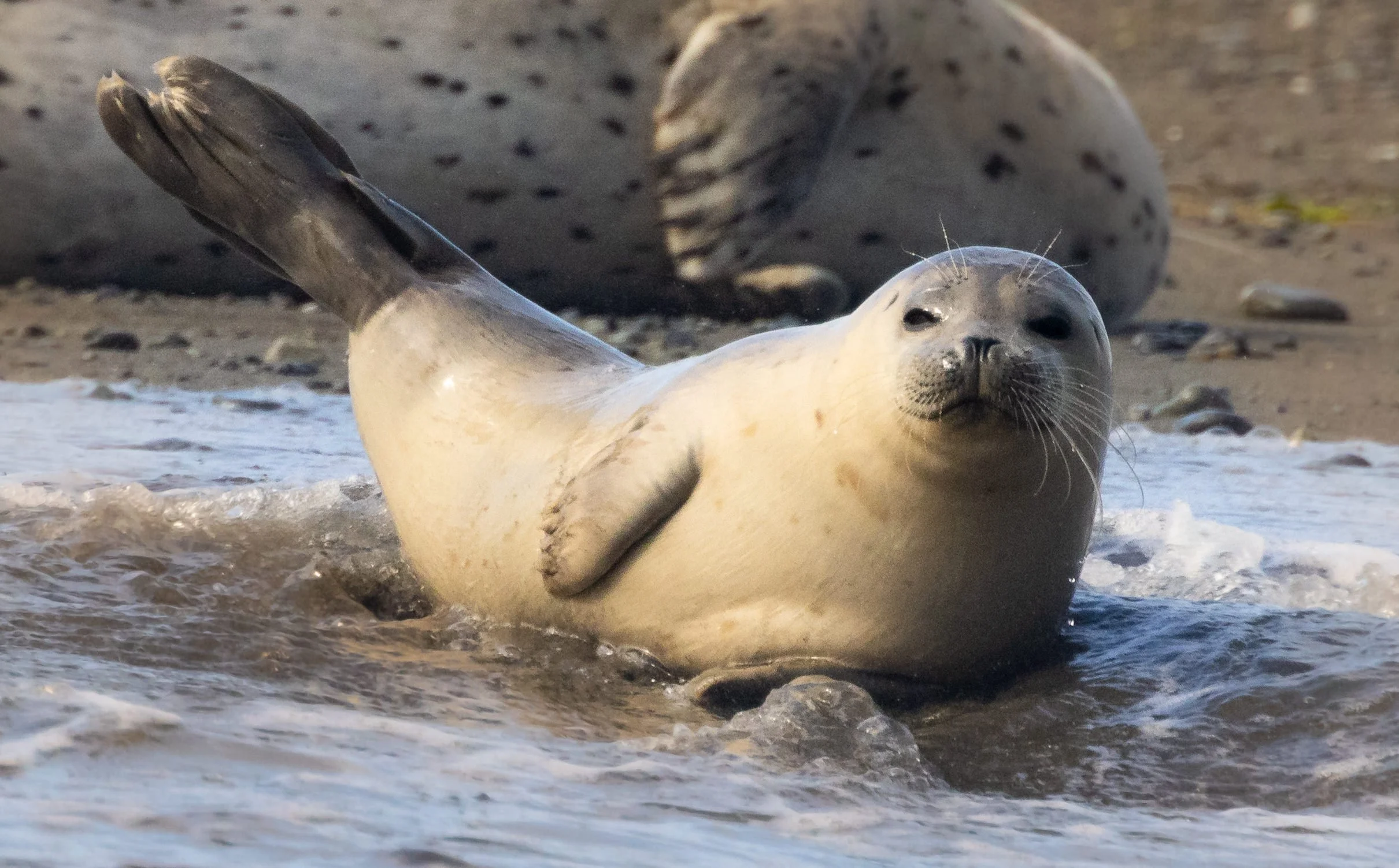
8. While on land, harbor seals continually produce thick viscous tears to keep their eyes moist. Harbor seals do not have tear ducts to drain tears into the nasal passage. The viscous tears they produce on land give the seals their characteristic wet-eyed appearance.
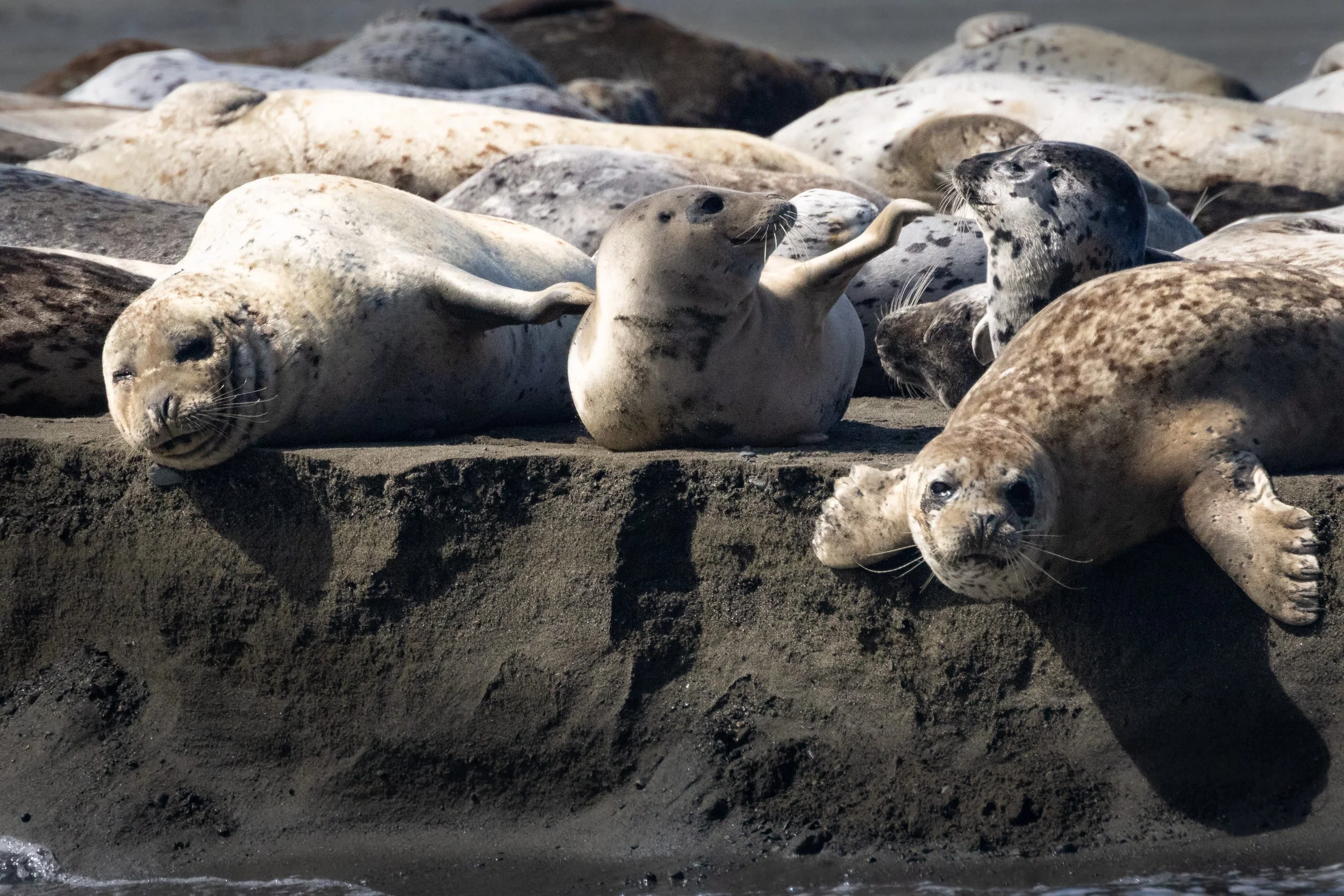
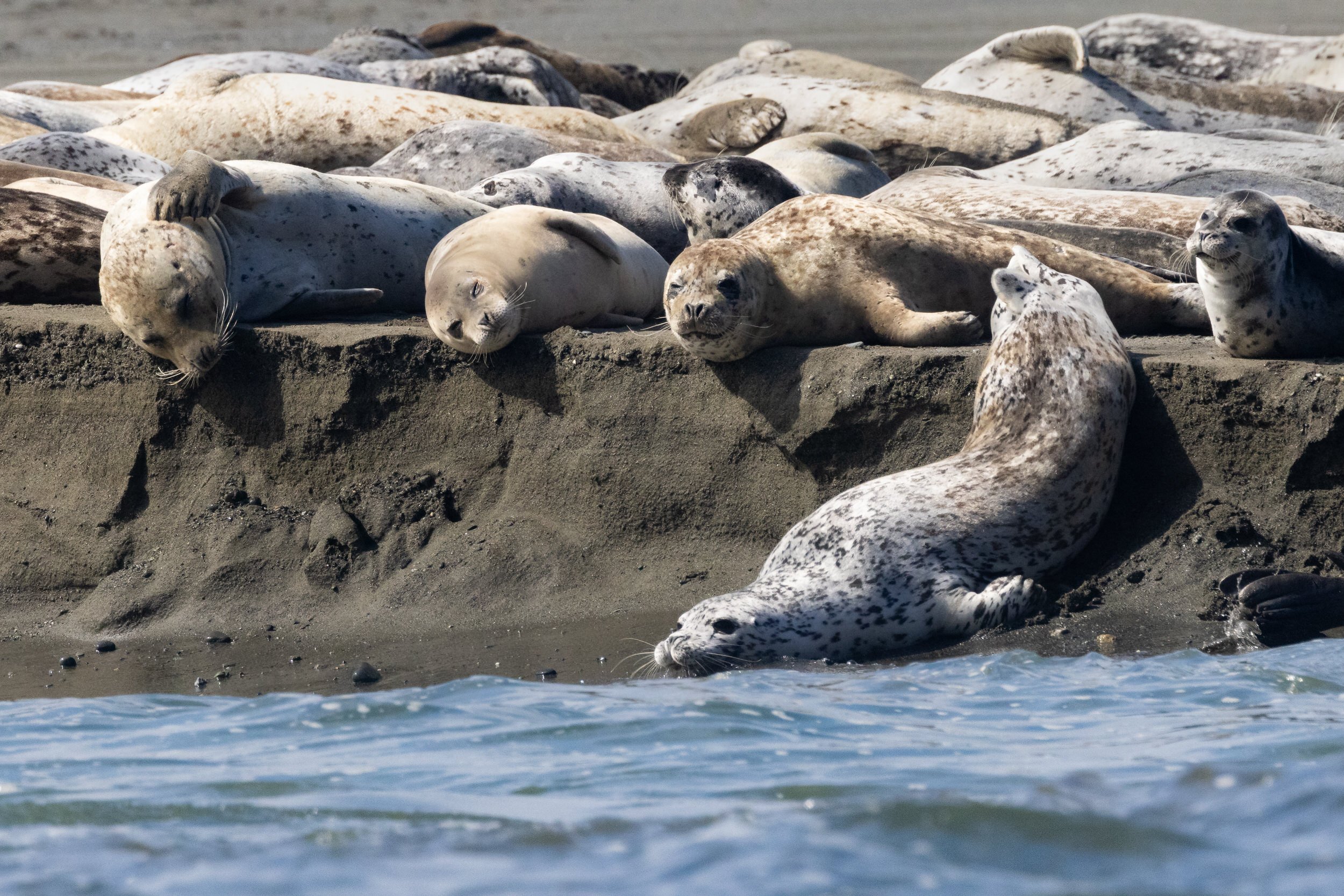
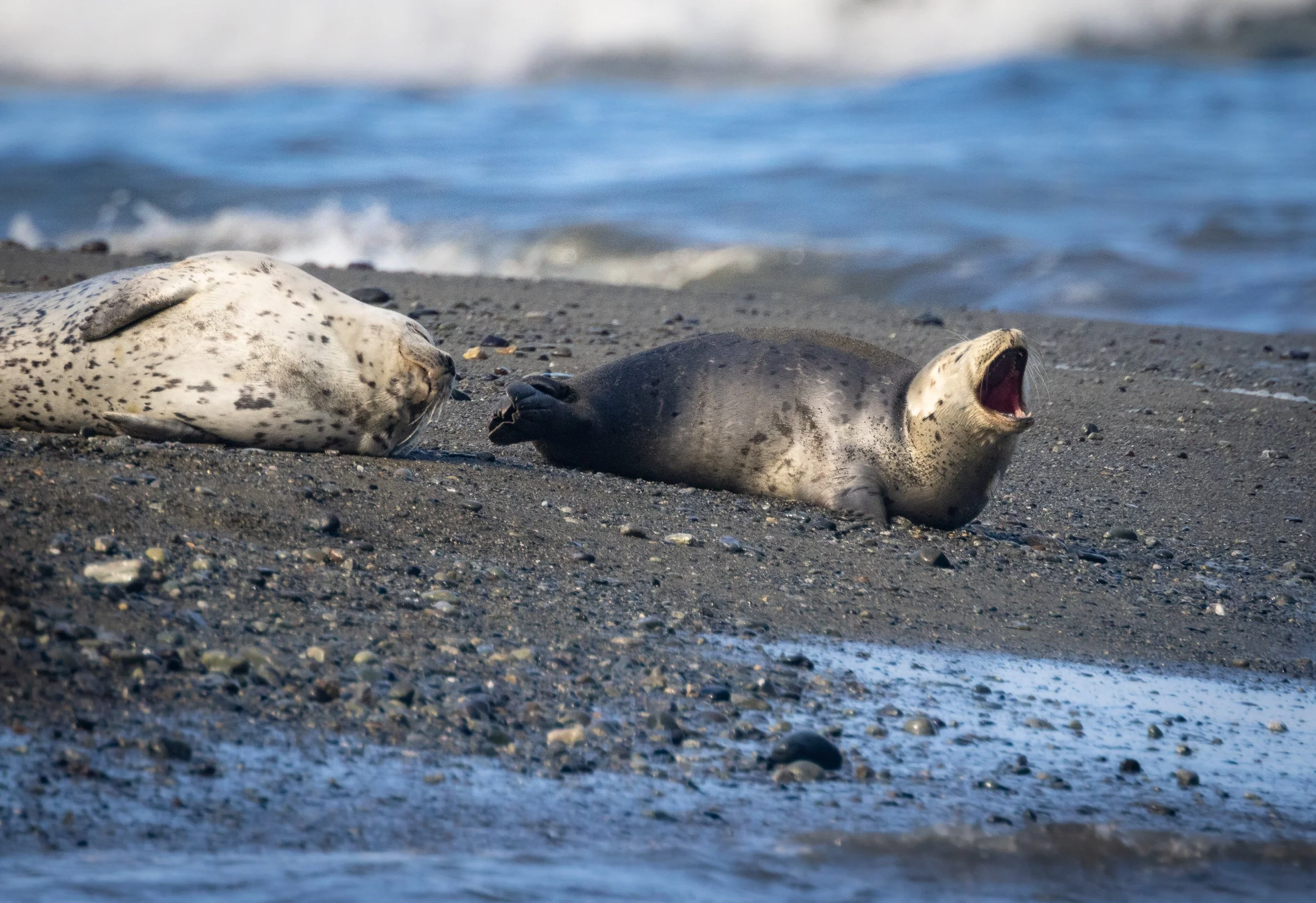
9. Harbor seals move on land by flopping along on their bellies using their front flippers. Their pelvic bones are fused, which prevents them from moving their hind flippers under their pelvis to move on land.
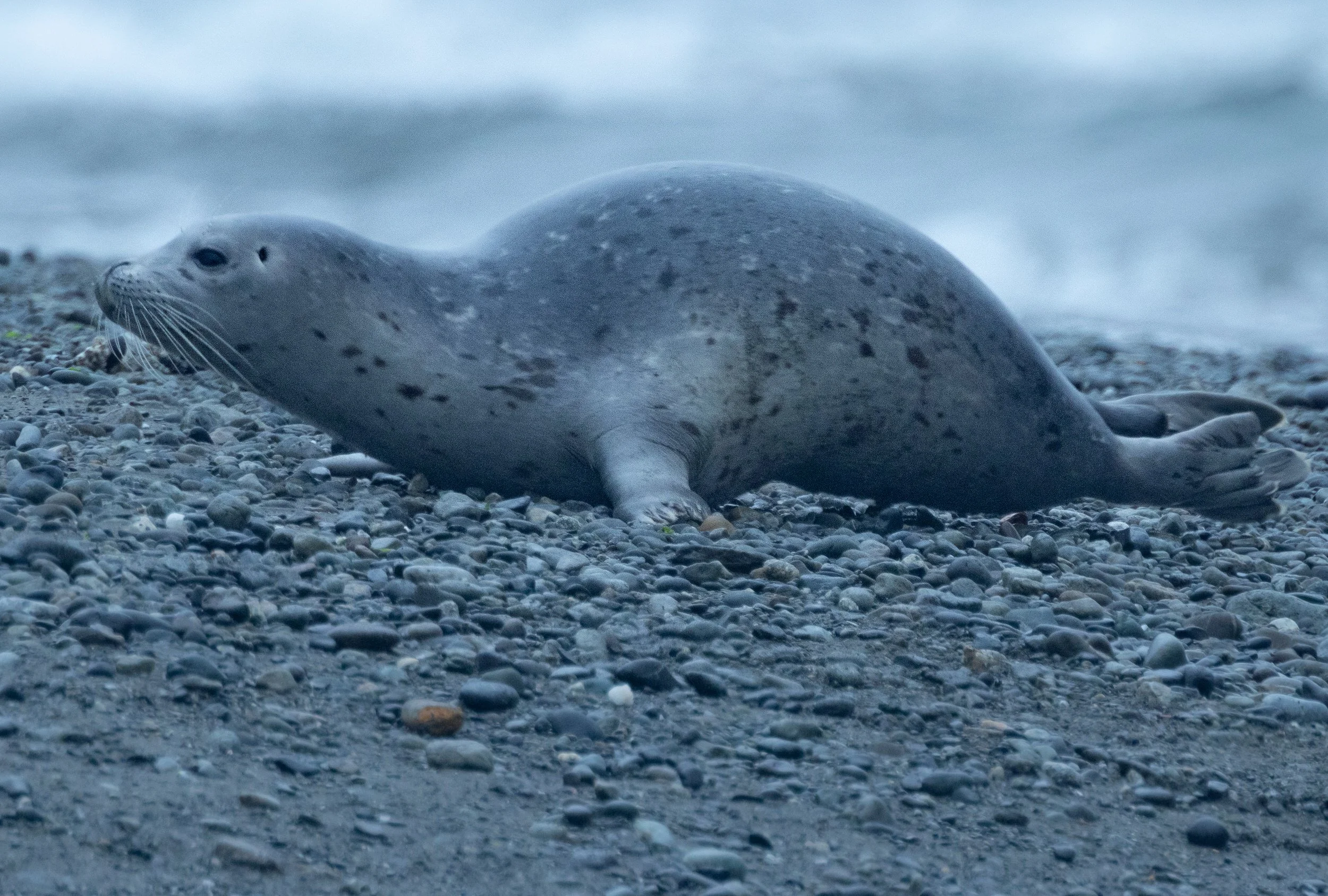
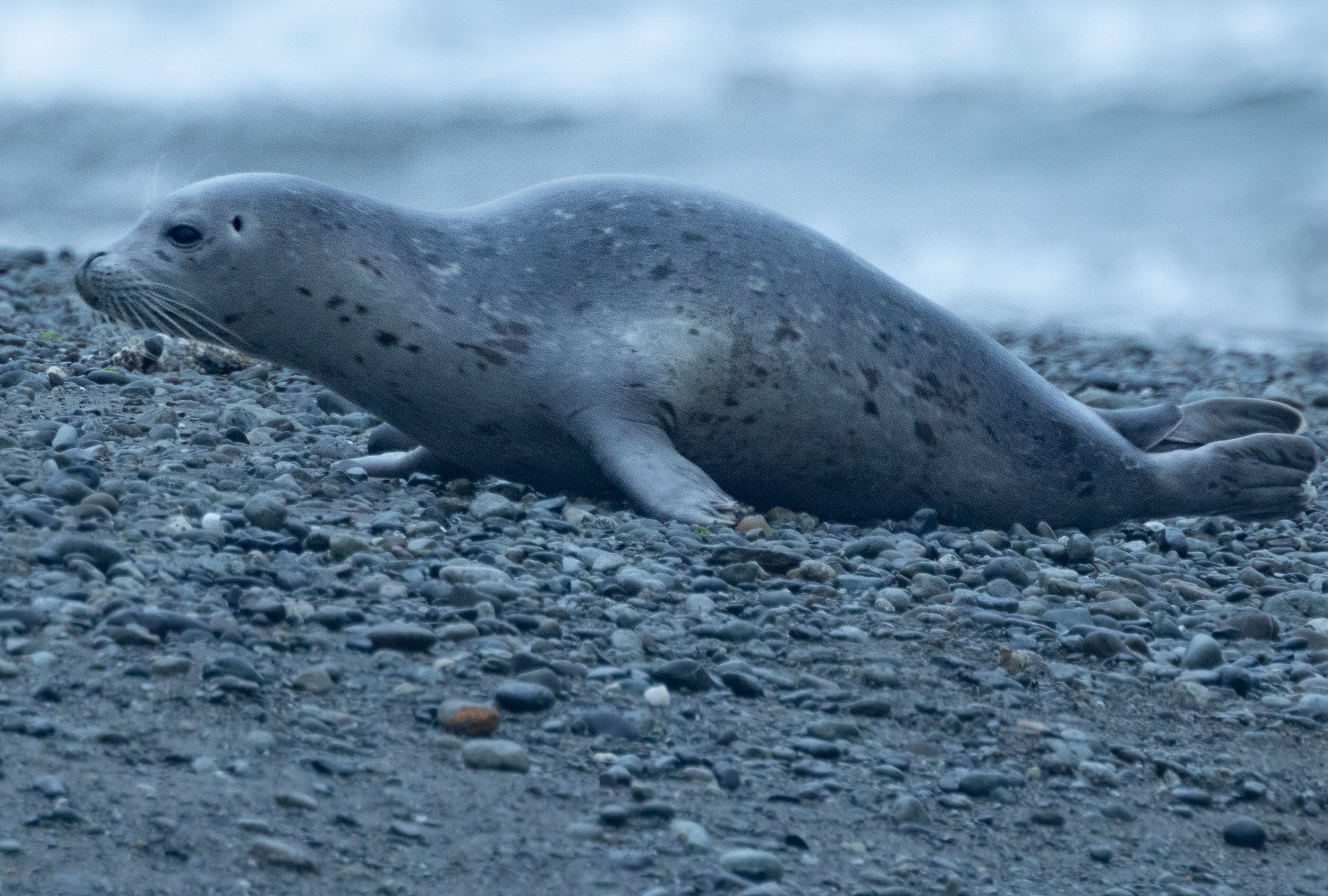
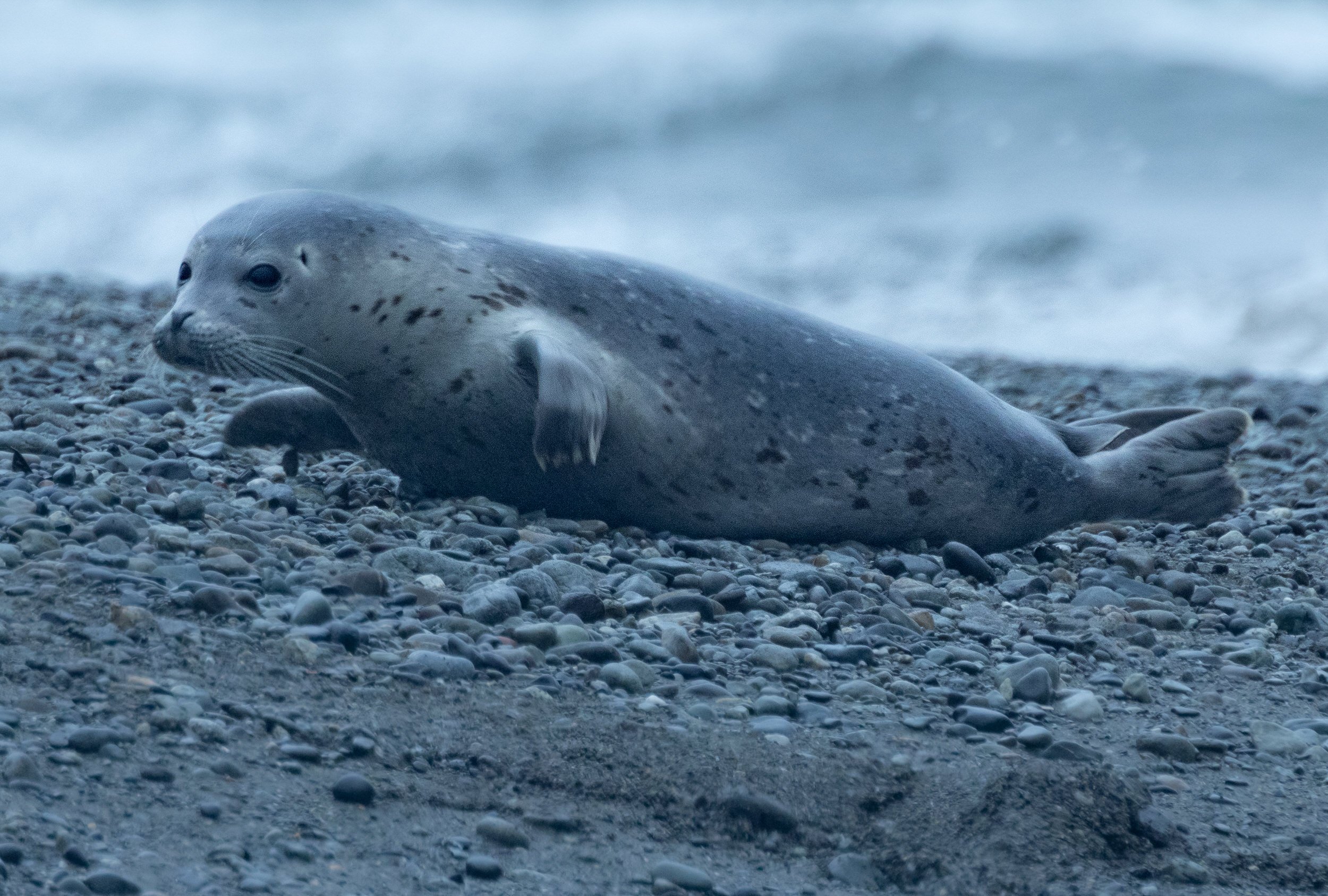
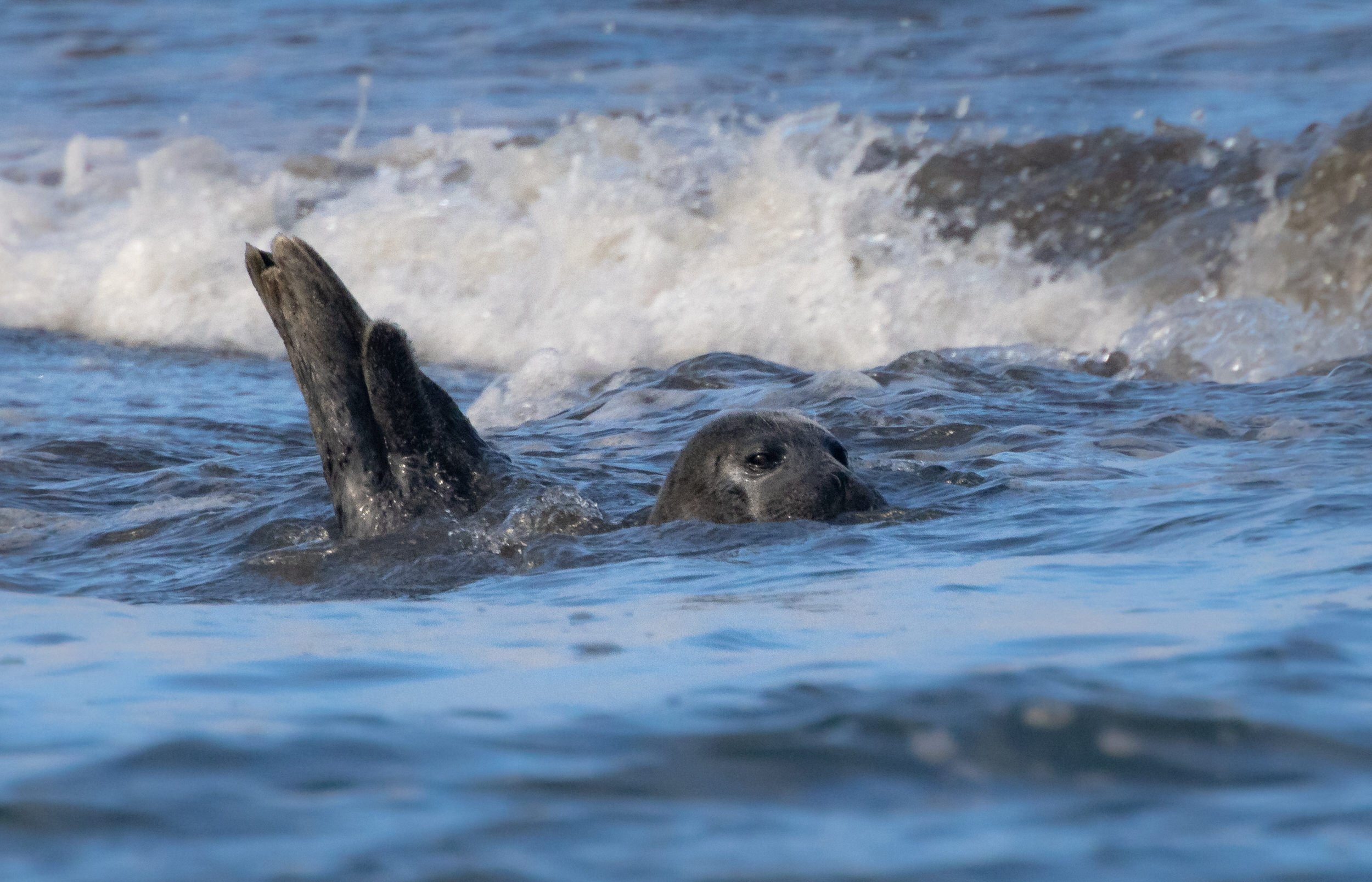
10. In the water they are efficient swimmers. They use their front flippers as rudders and their hind flippers for propulsion. Harbor seals swim by moving their hind flippers in a side to side motion to propel their bodies. They can swim as fast as 12 miles per hour, but generally swim slower.
11. They can dive down to depths of 1,500 feet and are capable of staying under water between 20-30 minutes. However, most dives are less than 65 feet and less than 4 minutes long. They close their ear openings and nostrils when diving.
12. Harbor seals have oxygen-conserving adaptations such as a high blood volume (a greater volume of blood than similar sized land mammals, allowing them to retain more oxygen in their abundant red blood cells while underwater), reduced peripheral circulation, reduced heart rate (their heart rate slows from 75-120 beats per minute to 4-6 beats per minute), and high levels of myoglobin (oxygen-binding protein in muscle that prevents muscle oxygen deficiency), which enables them to stay underwater for extended periods.
13. A harbor seal’s whiskers are very sensitive to vibrations and help the seal to detect prey. Seals move their whiskers in a sweeping movement by pushing their upper lip in and out. The vibrations detected by their whiskers help harbor seals to find prey in dark or murky water.
14. In order to maintain their body temperature (thermal regulation), harbor seals must “haul out” (come out of the water) on land between 7 and 12 hours each day. While in cold water, a seal’s blood vessels constrict, slowing the flow of blood to the skin and reducing heat loss. The process is reversed when the seal is hauled out – the blood vessels dilate, allowing heat to be released.
15. Adult females typically give birth to one pup each year. Mating occurs underwater and the gestation period is 9 months.
16. Mothers typically nurse their pups for 4 to 6 weeks. Pups are well-developed when born and can swim and dive within hours. A mother may sometimes carry her pup on her back while swimming and diving.
17. Each year after the breeding season, pacific harbor seals undergo an annual molt, losing their hair over a period of one to two months. During the molt, their ability to retain heat is greatly reduced. During this time, they spend less time in cold water and more time on land.
18. Harbor seals have an average lifespan of 25 to 30 years.