Growing Up Great: A baby heron story
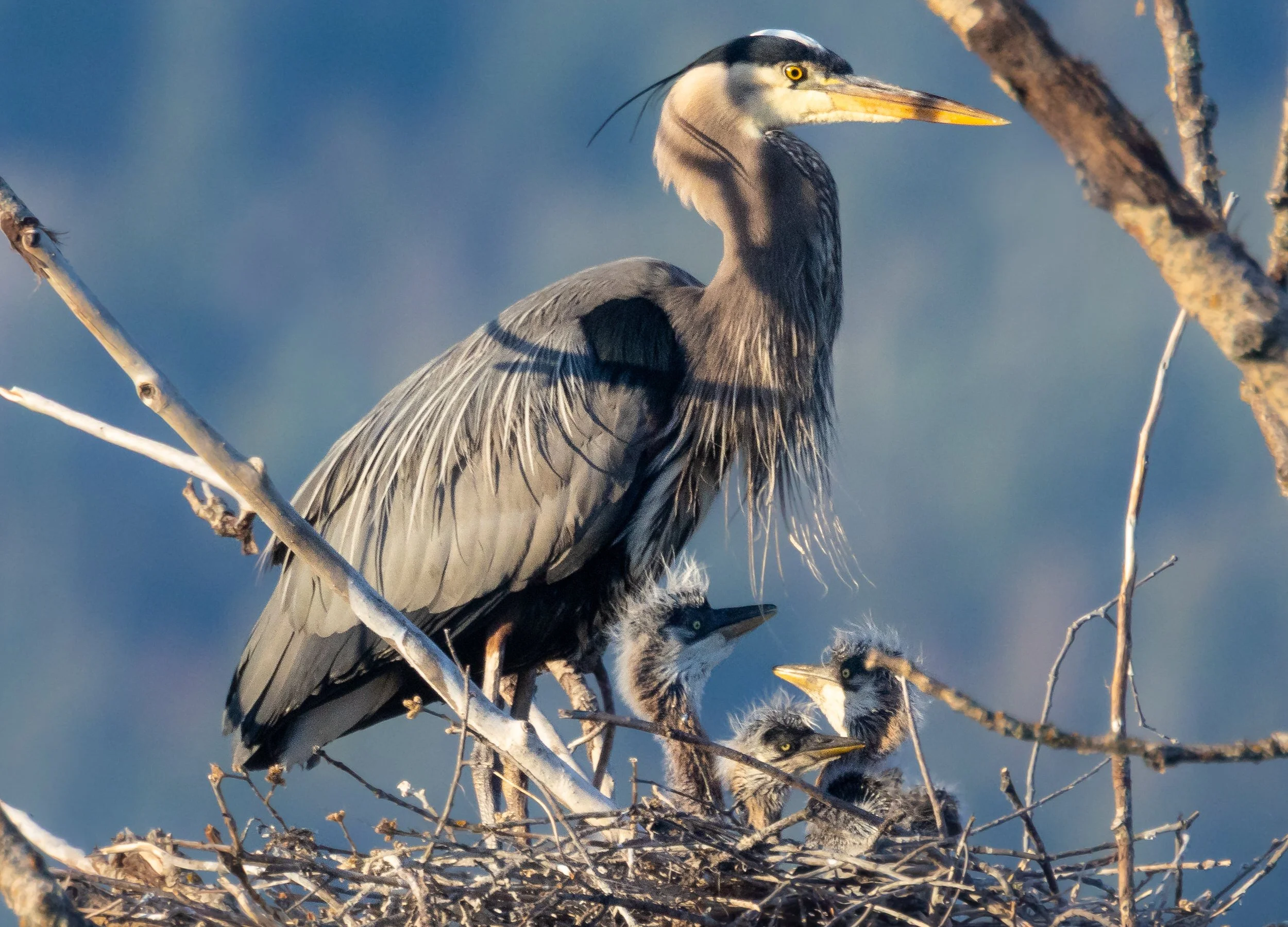
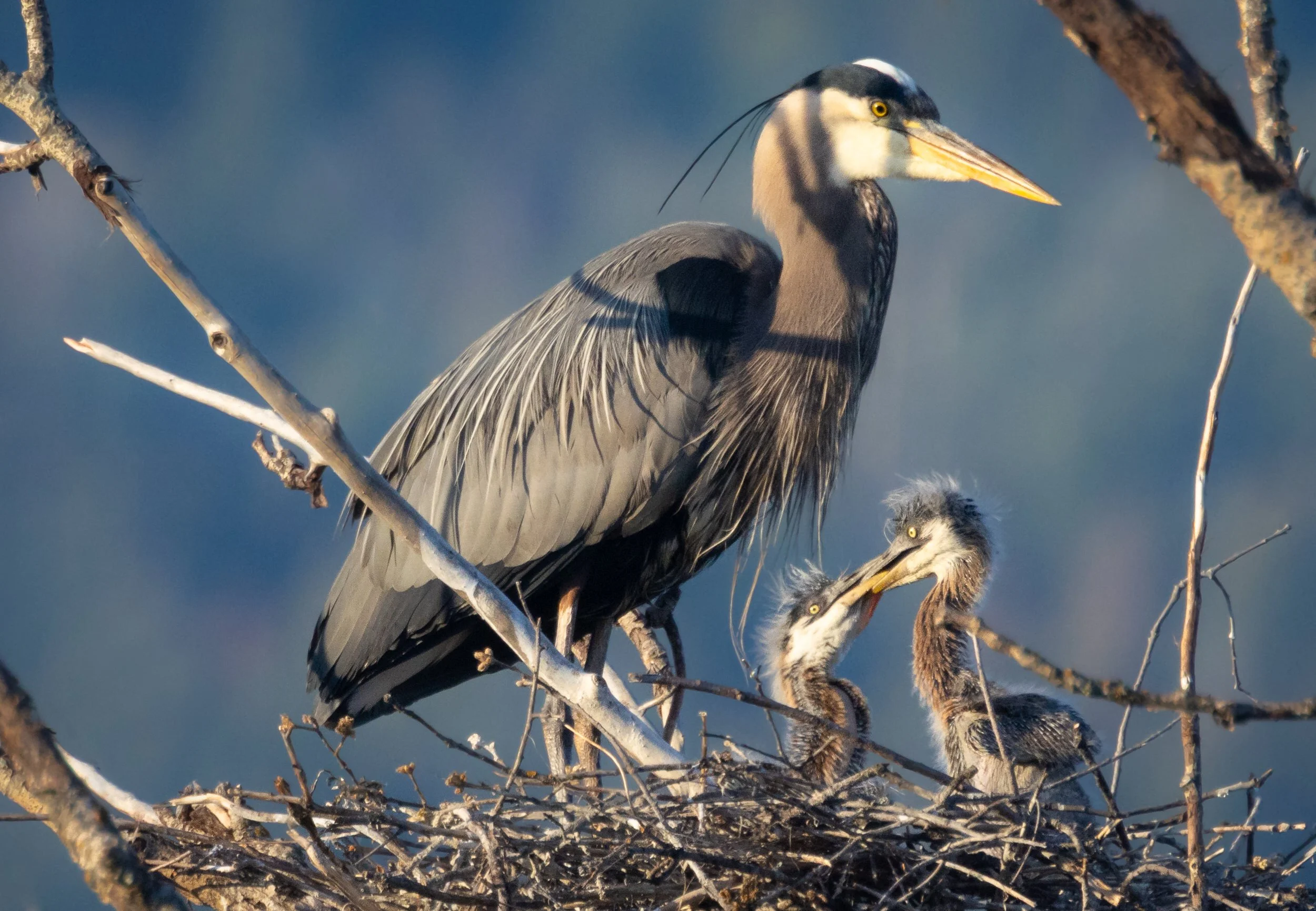
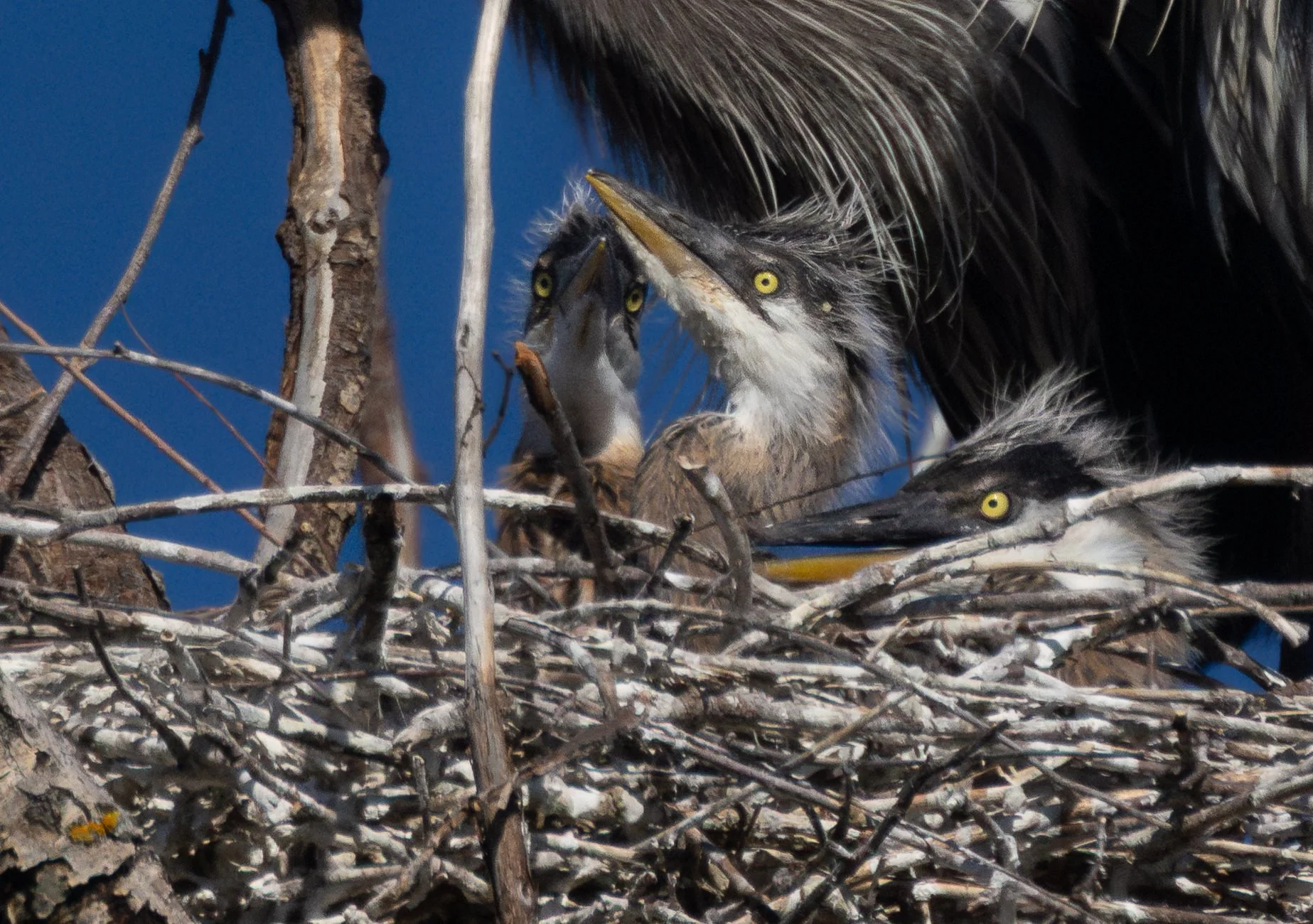
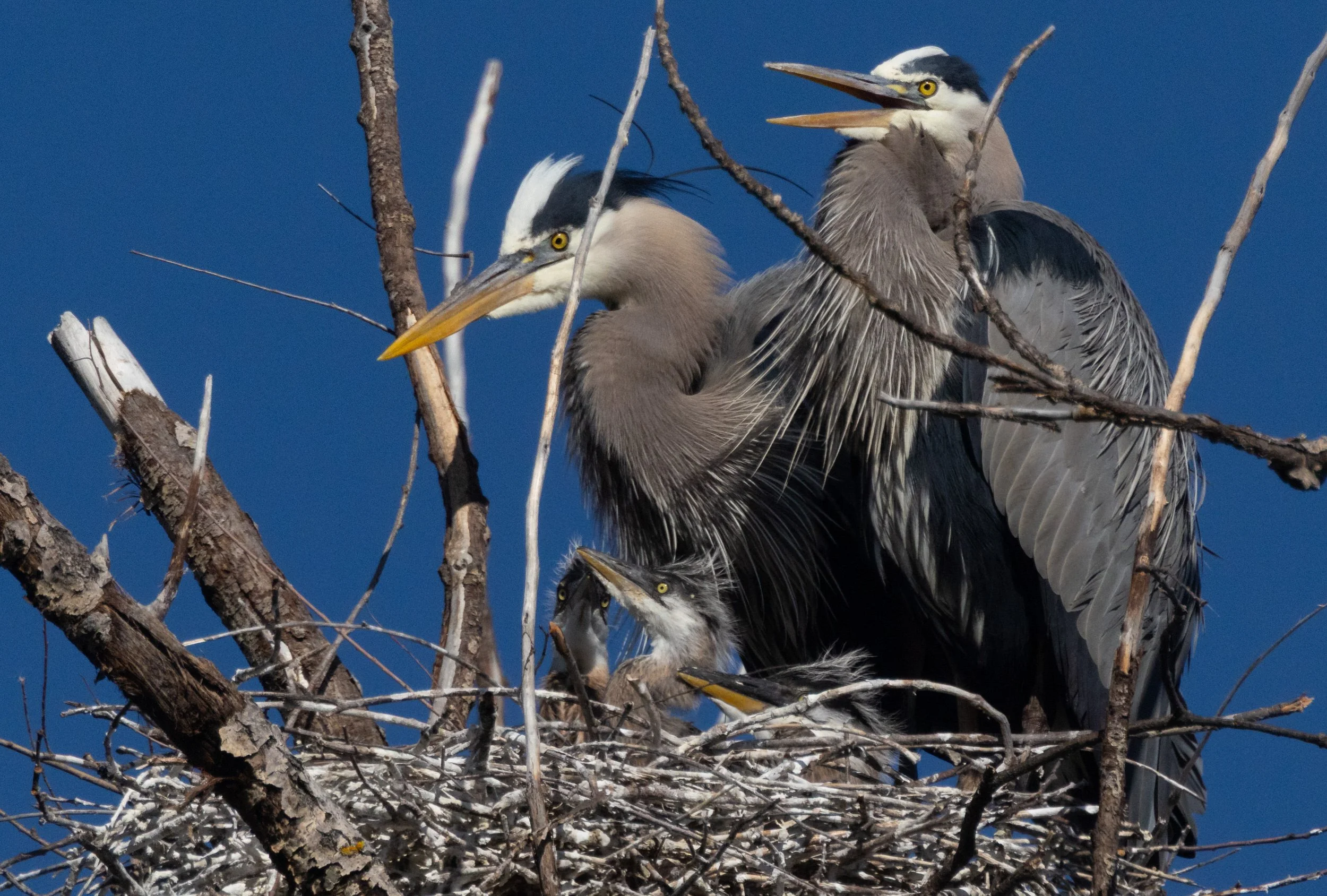
Great blue heron with newborn chicks
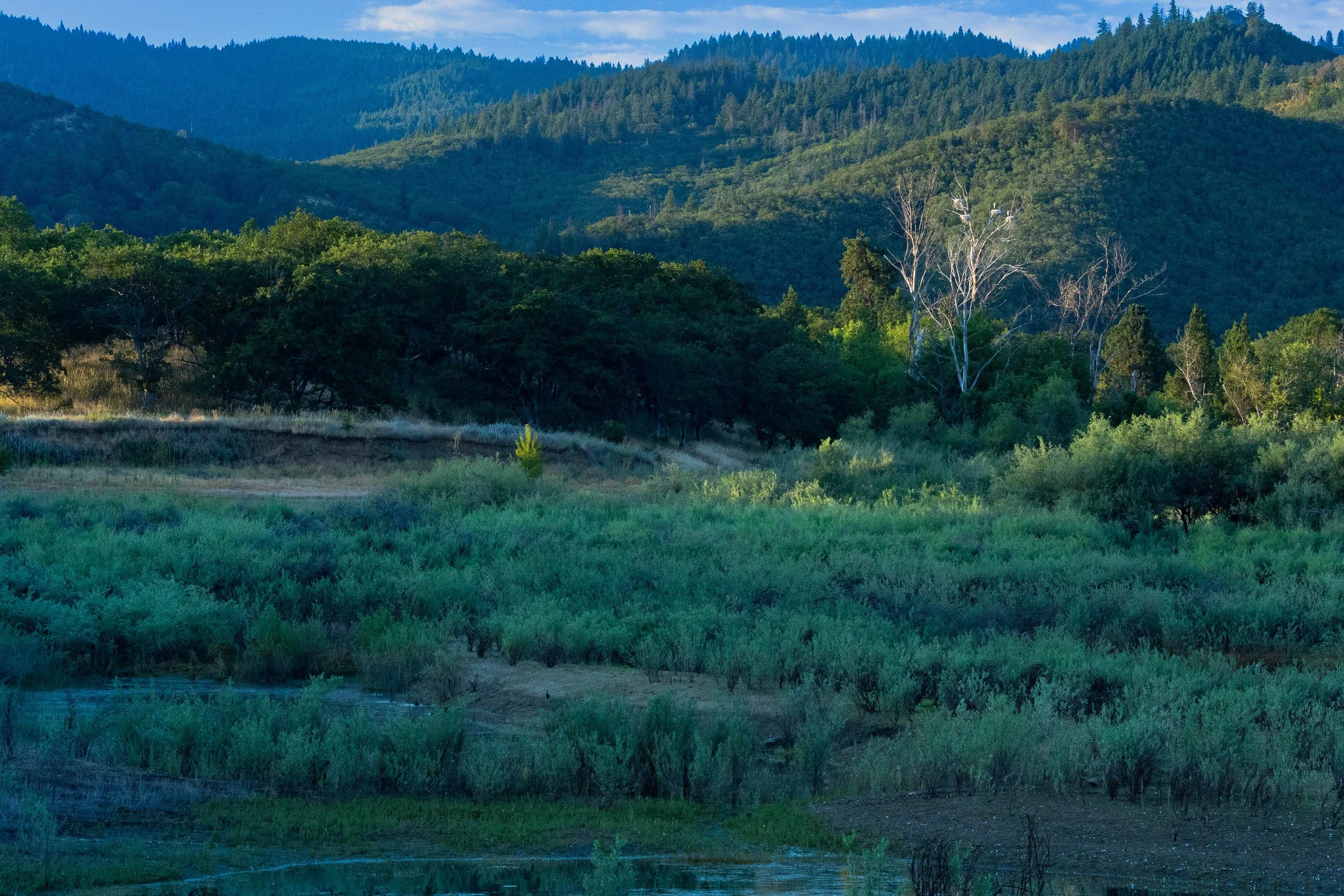
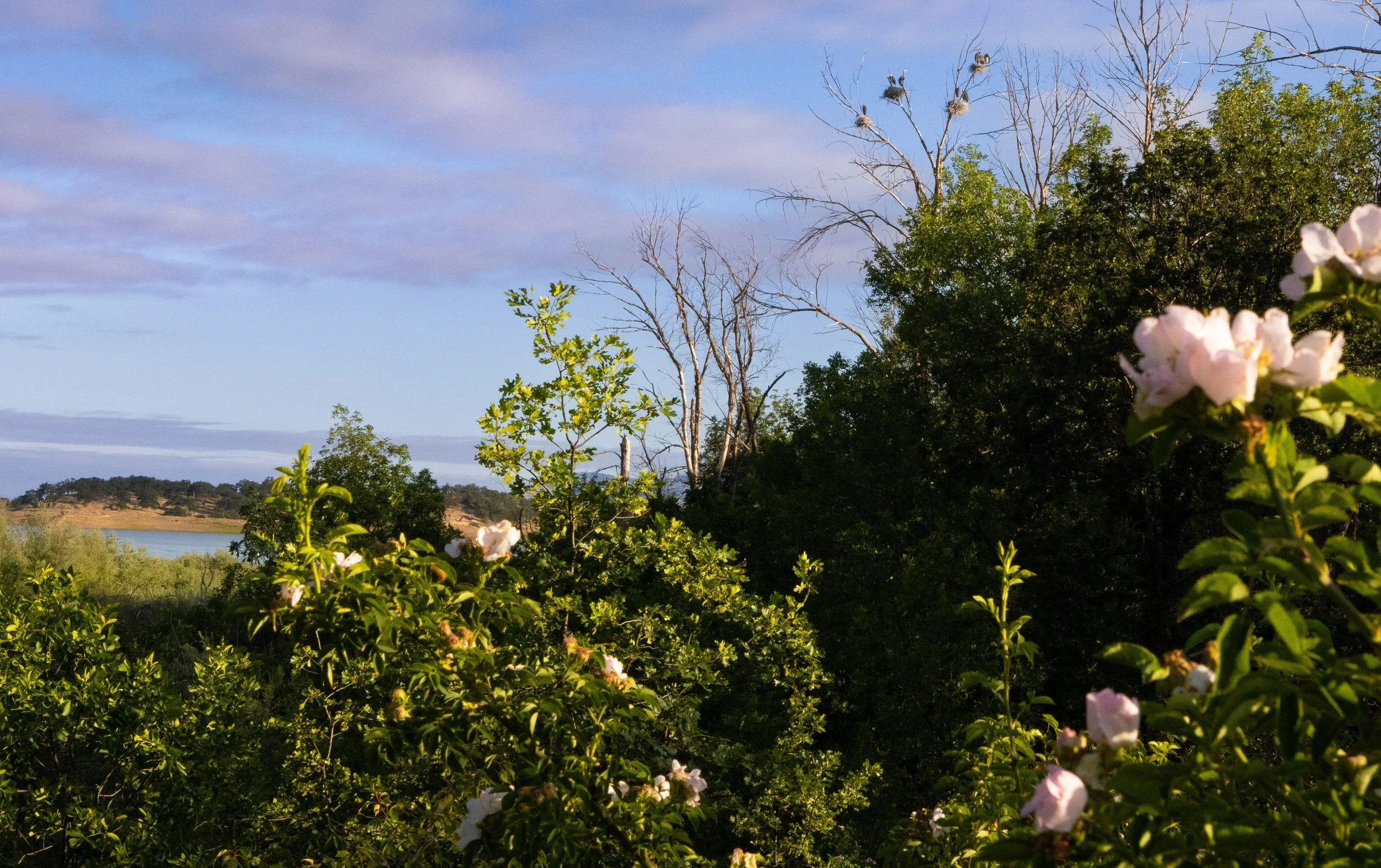
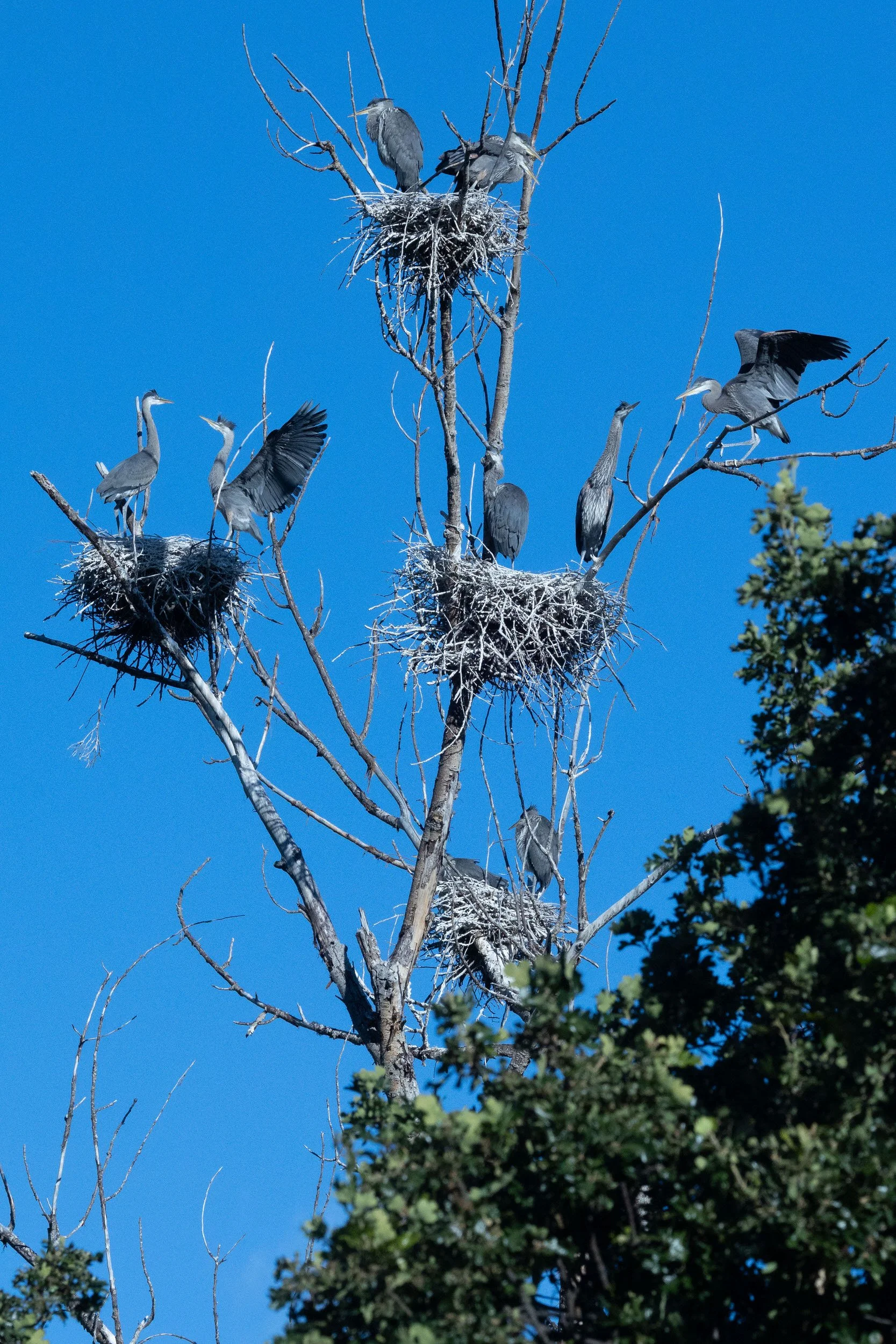
It’s early spring and an empty great blue heron nesting site in southern Oregon is coming back to life. Four pairs of great blue herons have arrived and they are preparing for this year’s breeding season. Male and female great blue herons work together to build platform nests at the top of a tall barren tree. The males and females take turns gathering sticks from the marsh below. They return to the nest and work with their partner to weave the sticks into the nest. At this nesting site, four nests are built.
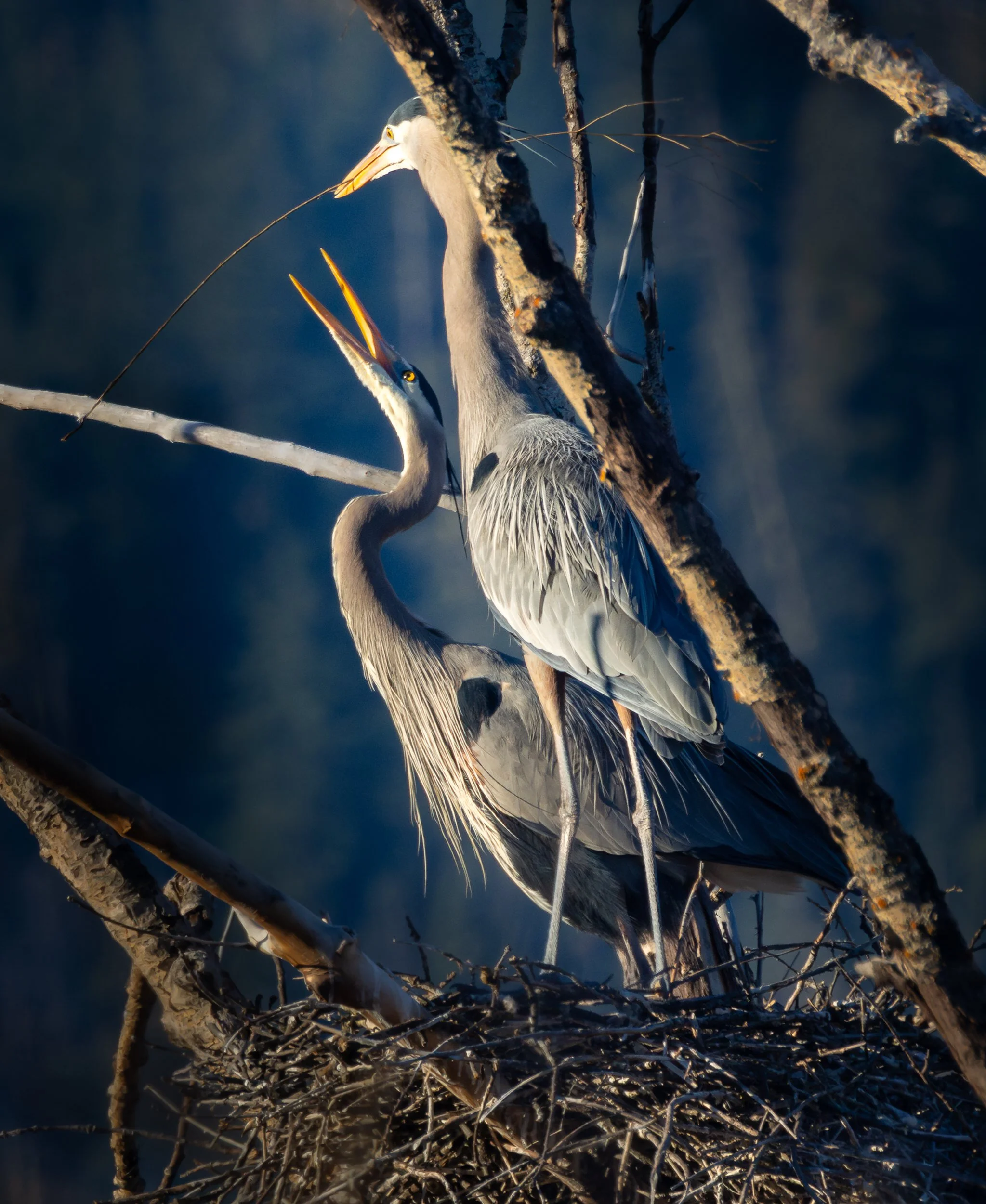
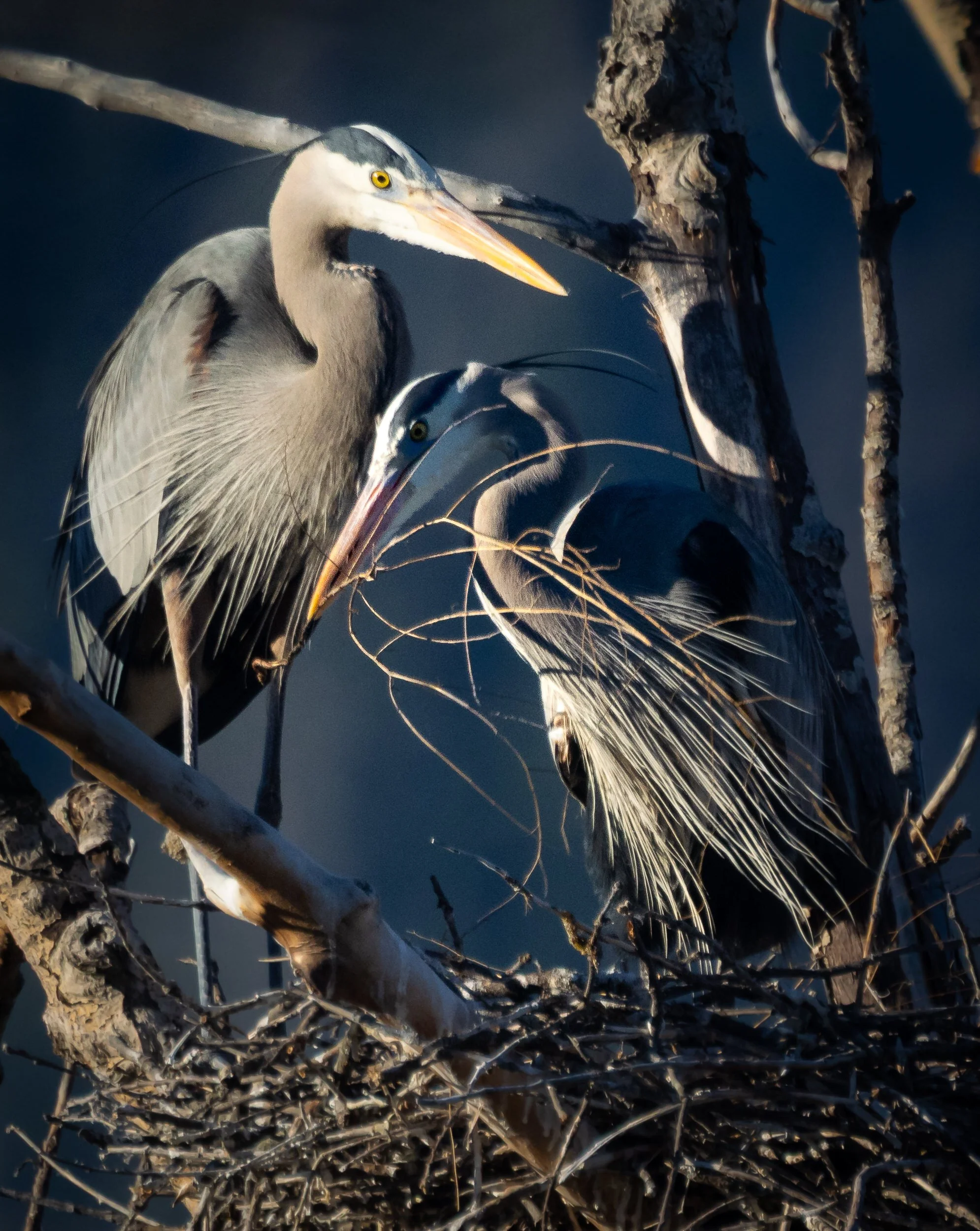
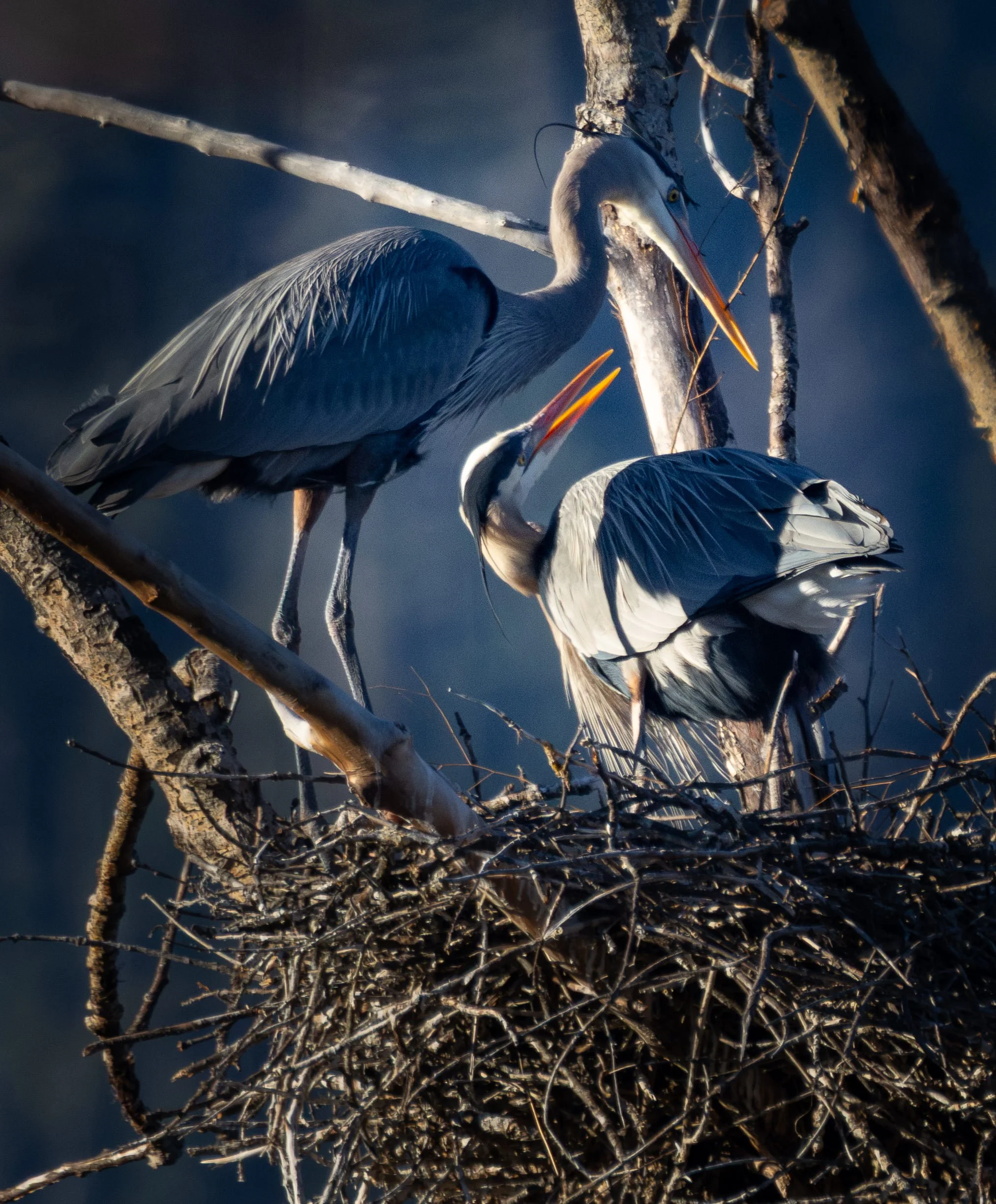
Great blue herons are the largest herons in North America and can be found in many environments near water, such as ponds, lakes, marshes, and shallow coastal bays. Great blue herons grow up to 4 feet tall with wingspans of 6 feet. Despite their impressive size, great blue herons weigh only 5 to 6 pounds thanks in part to their hollow bones. They have long yellow bills and long feathers at the base of the neck that plunge down in a kind of necklace. The females and males look similar.
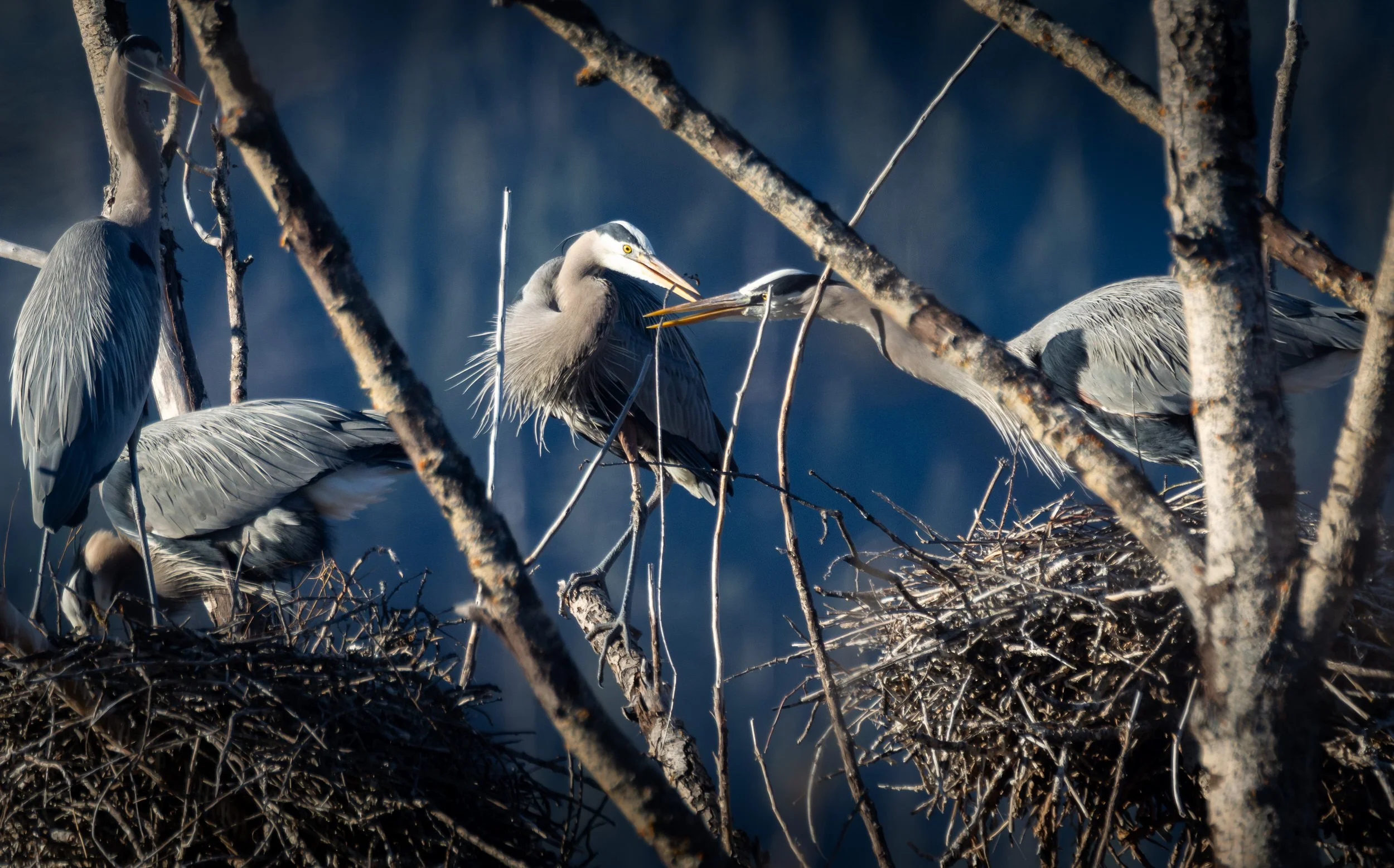
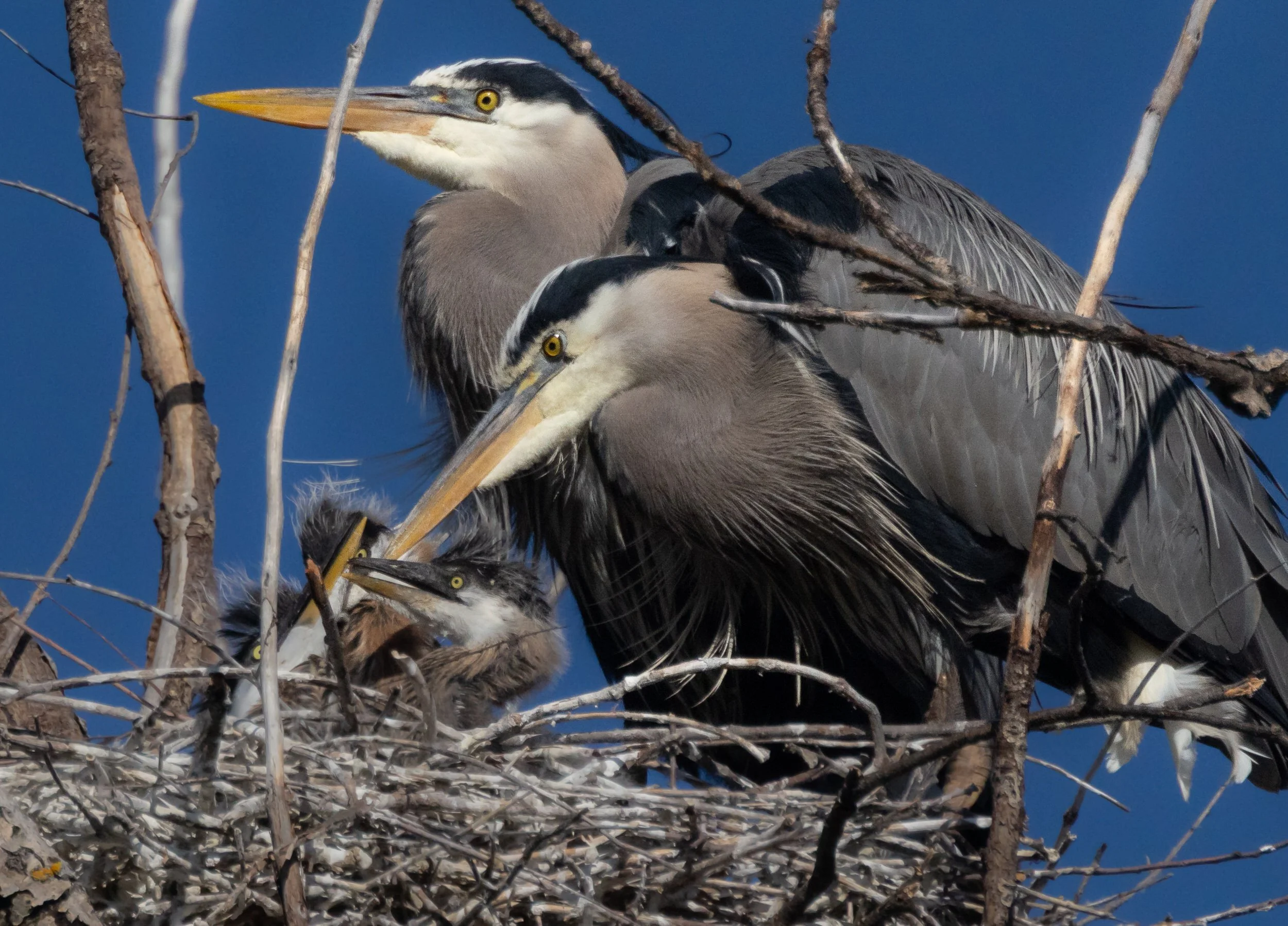
Their breeding season begins from early March through April and they have one brood per year. The females lay 3-5 blue-green colored eggs that are incubated 27-28 days. During the incubation period, the males and females take turns incubating the eggs. During this time, one great blue heron remains in the nest at all times. Throughout the day the pair will switch allowing each bird time to fly out in order to eat.
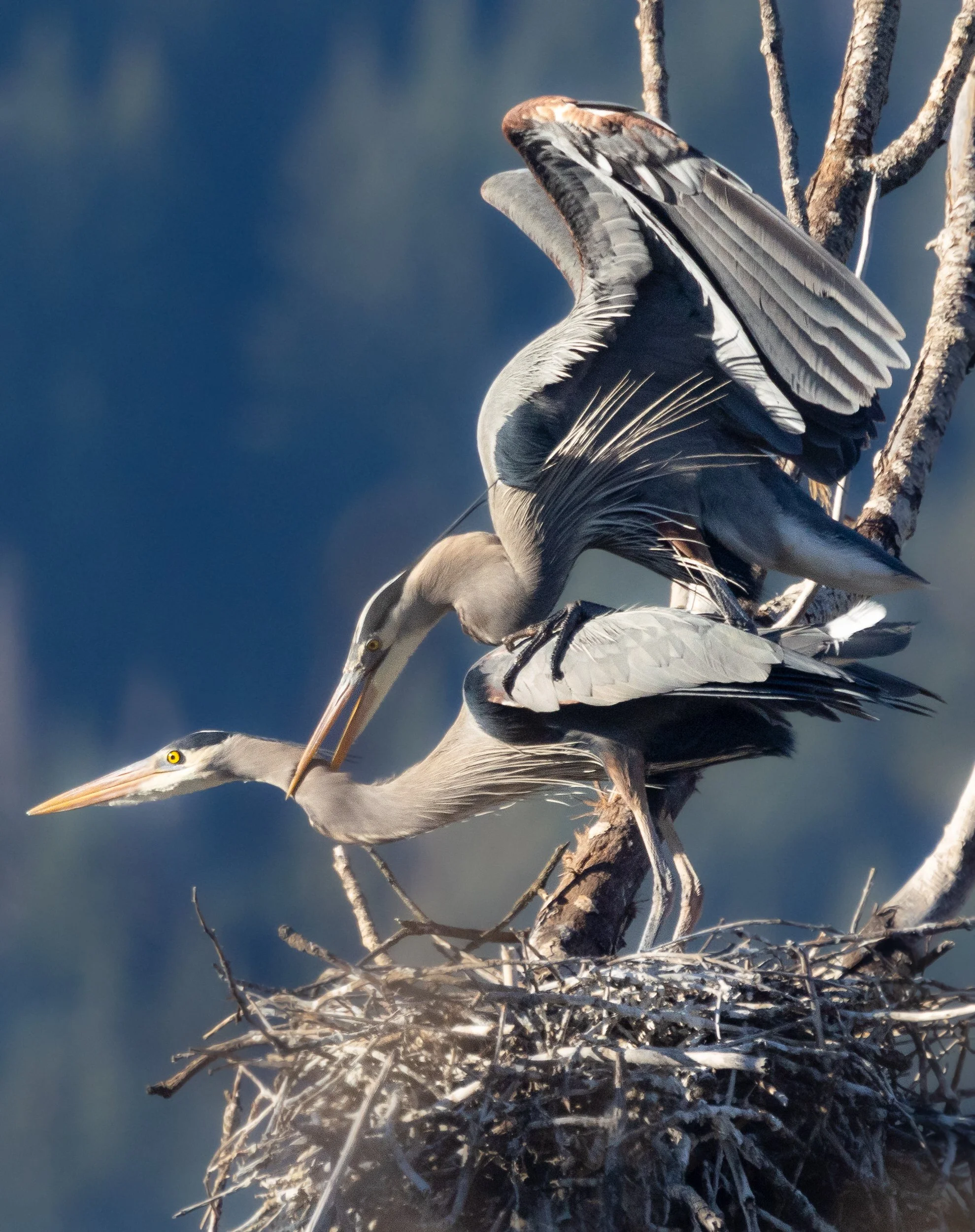
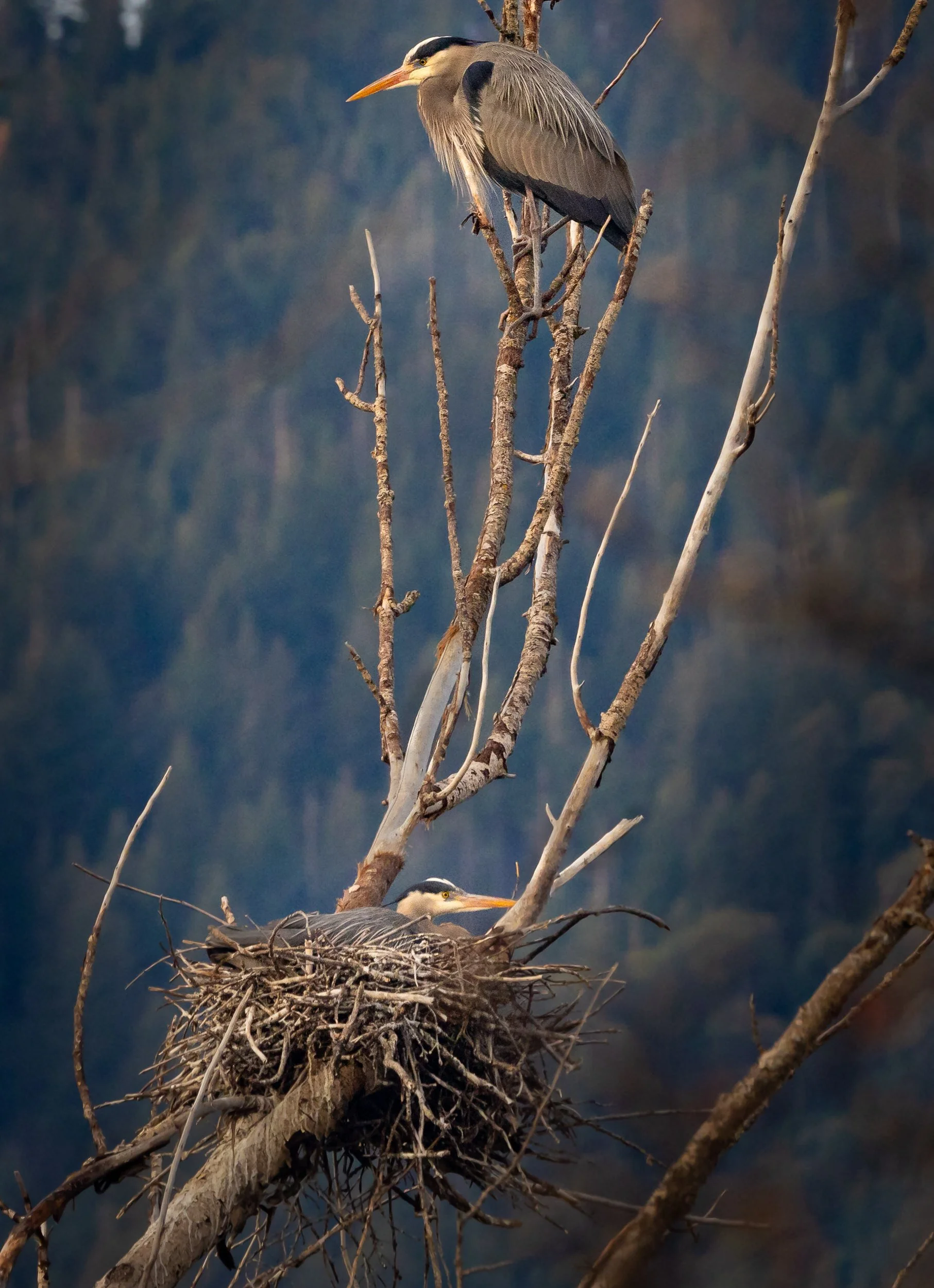
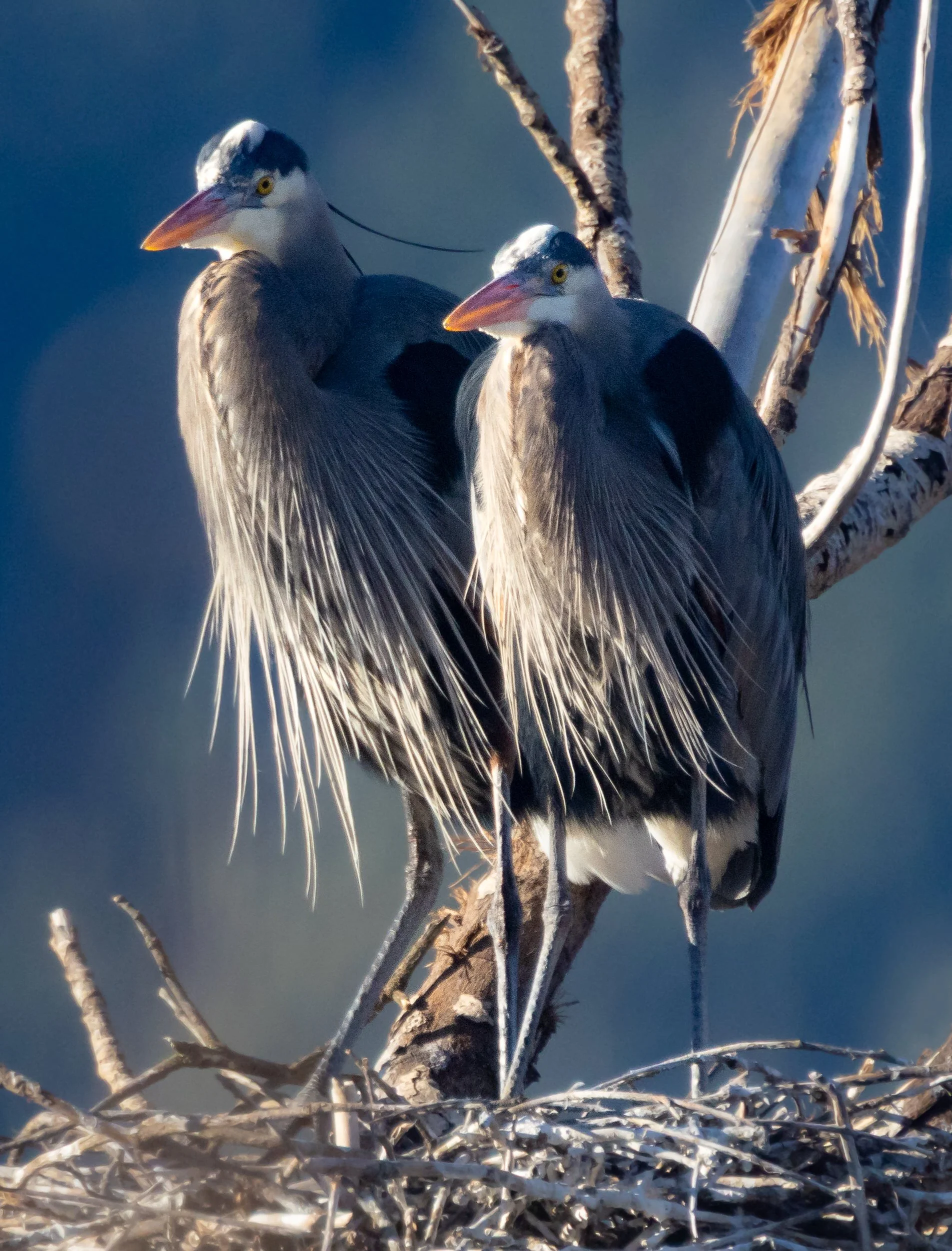
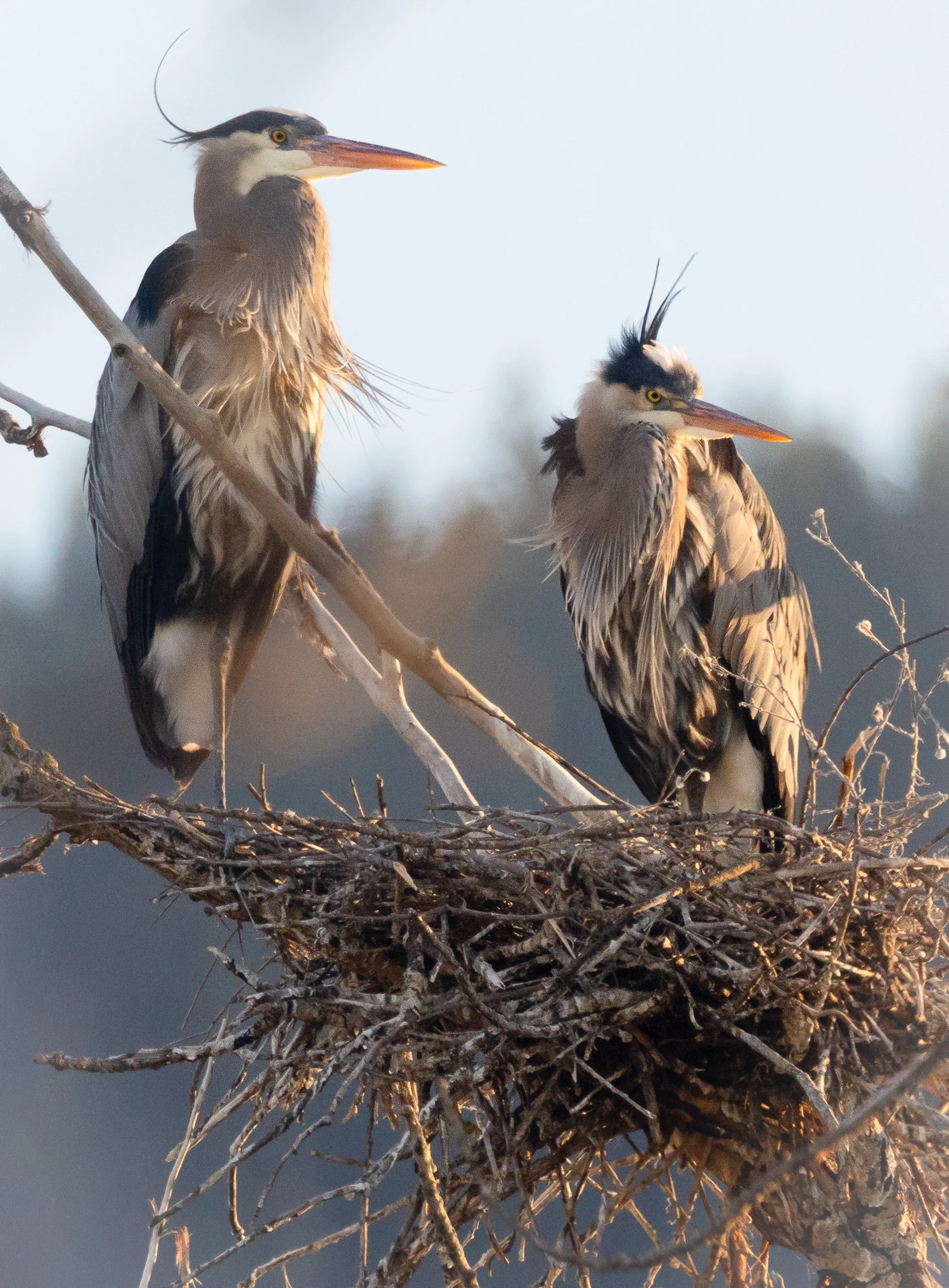
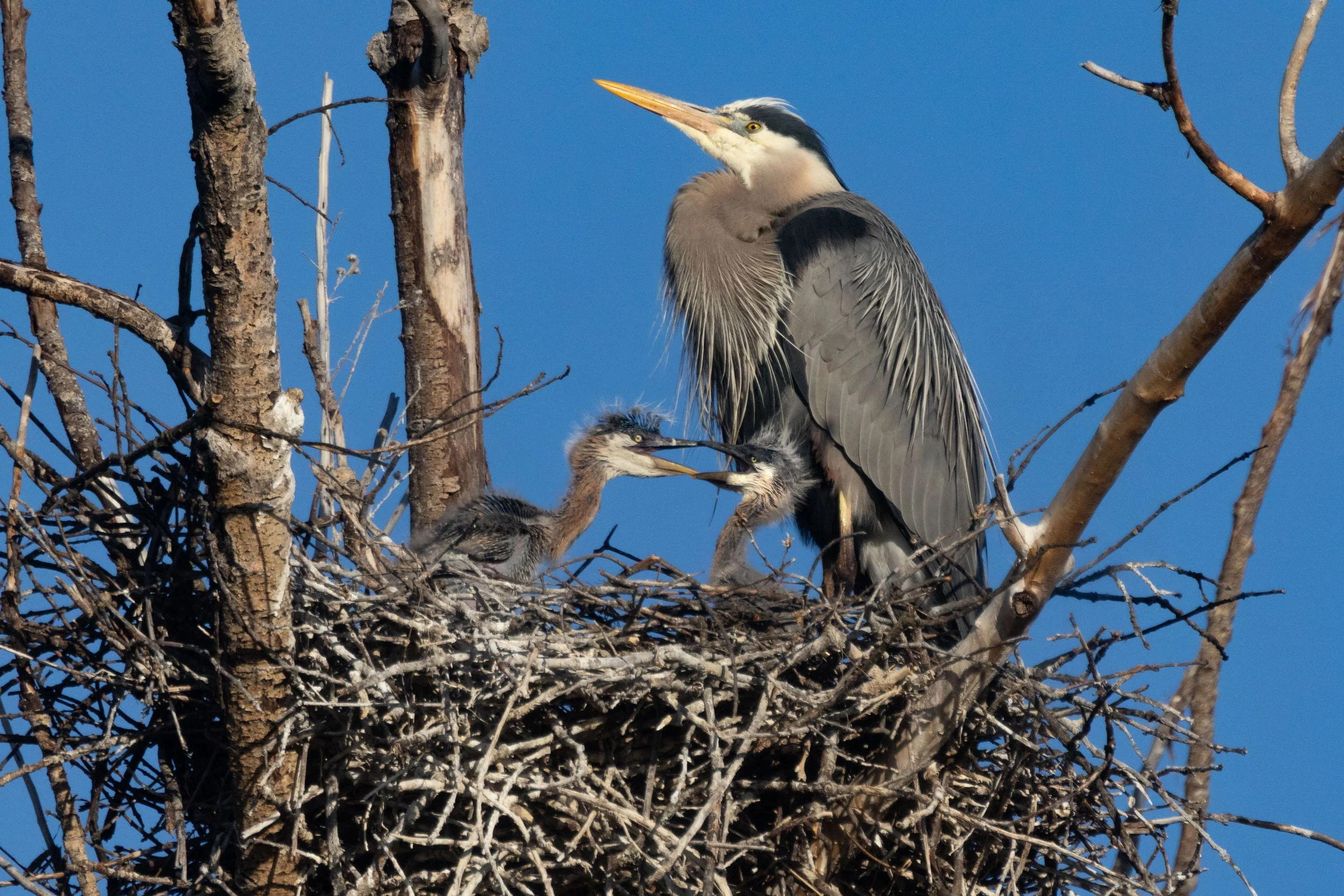
Both parents earnestly await the birth of their babies and will both help raise them. When the babies are born, the parents work tirelessly all day to feed the newborns. They spend many hours fishing in the shallow water nearby. They swallow their catch whole and return to the nest where they regurgitate the food to feed their babies. The great blue heron has a relatively wide diet, consuming fish, insects, amphibians, crustaceans, and even small reptiles and mammals. The herons stand in or alongside water, striking their prey with their bills.
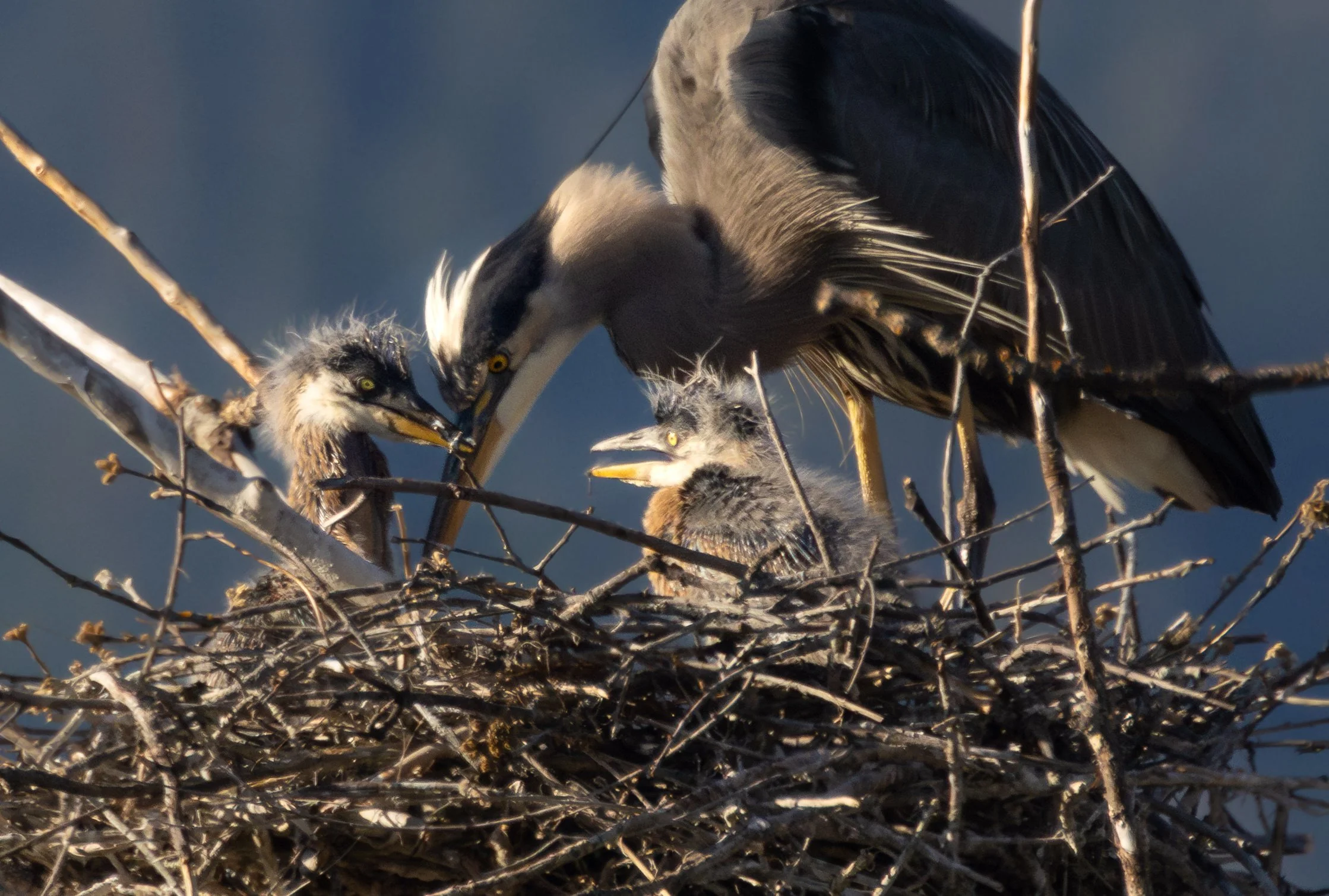
The babies grow quickly, practically doubling in size in a few short weeks, and by two months they are almost as big as their parents.
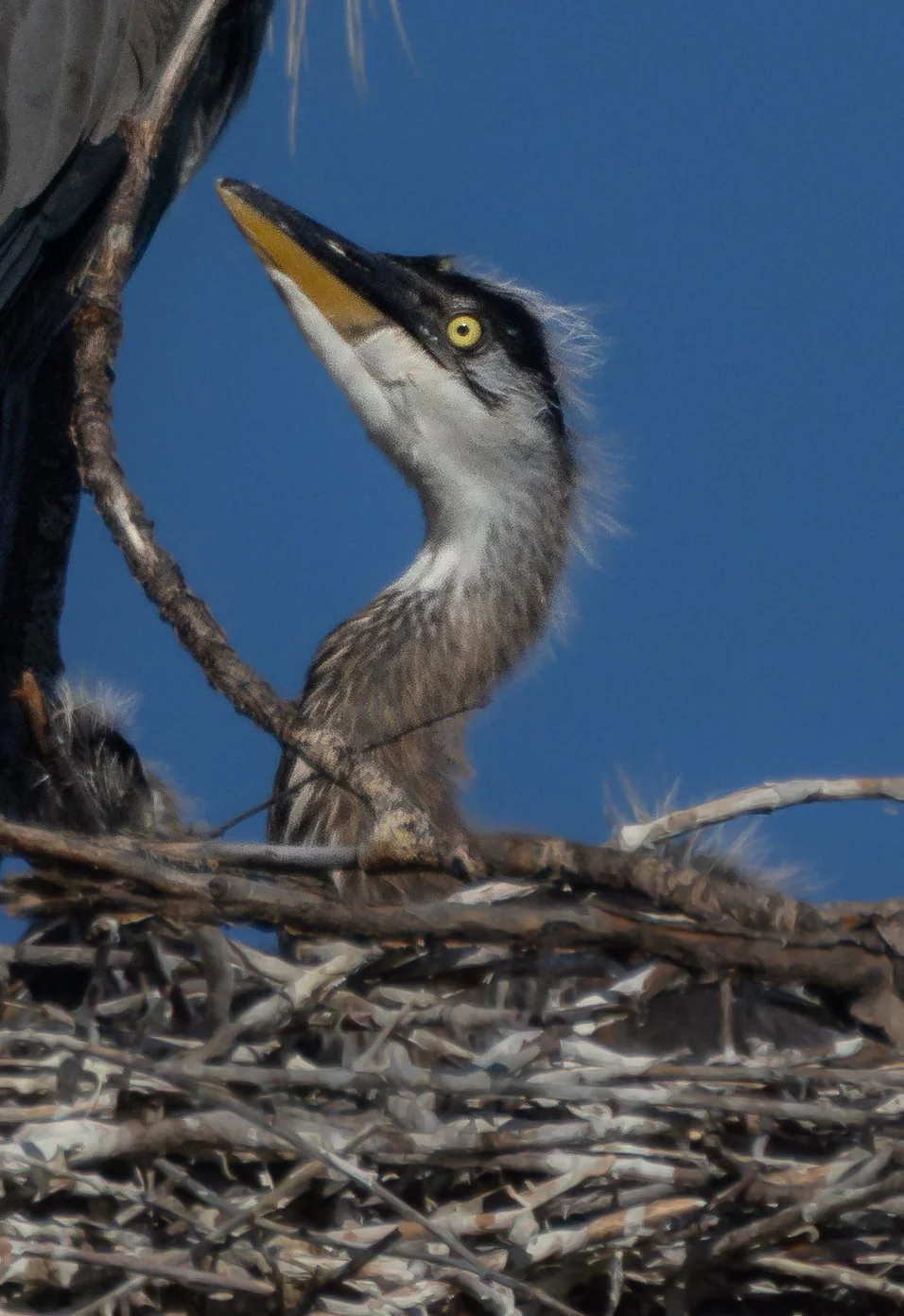
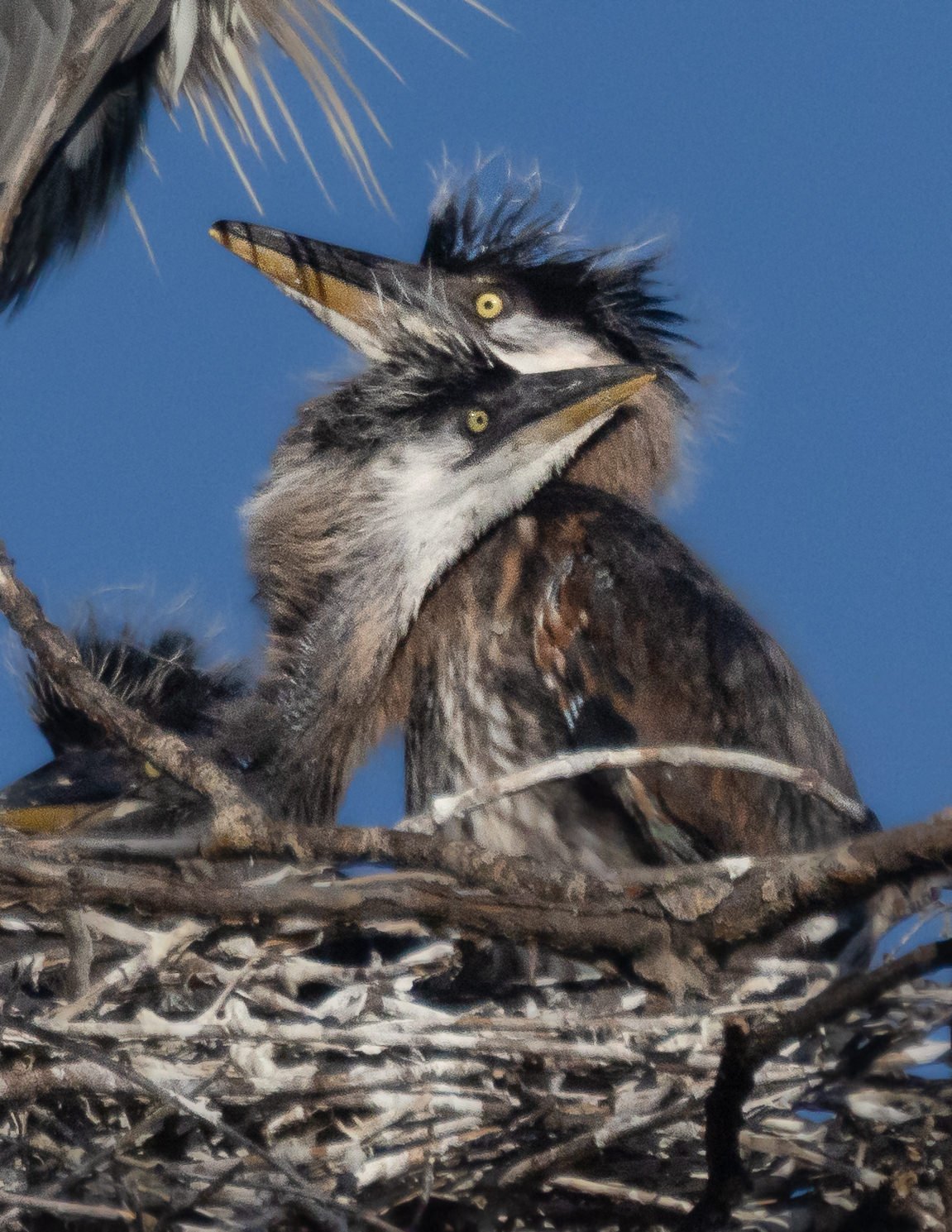
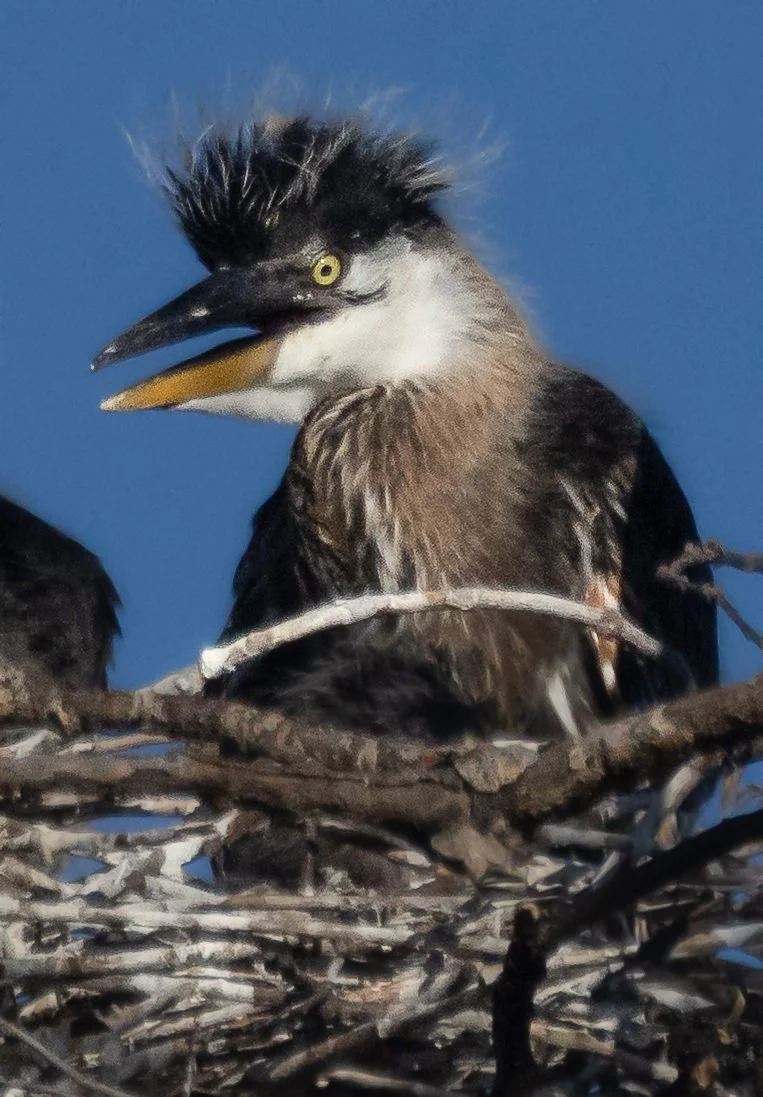
They spend their days learning to preen, play fighting each other, gobbling down as much food as possible, and observing the world from their magnificent viewpoint high in the sky.
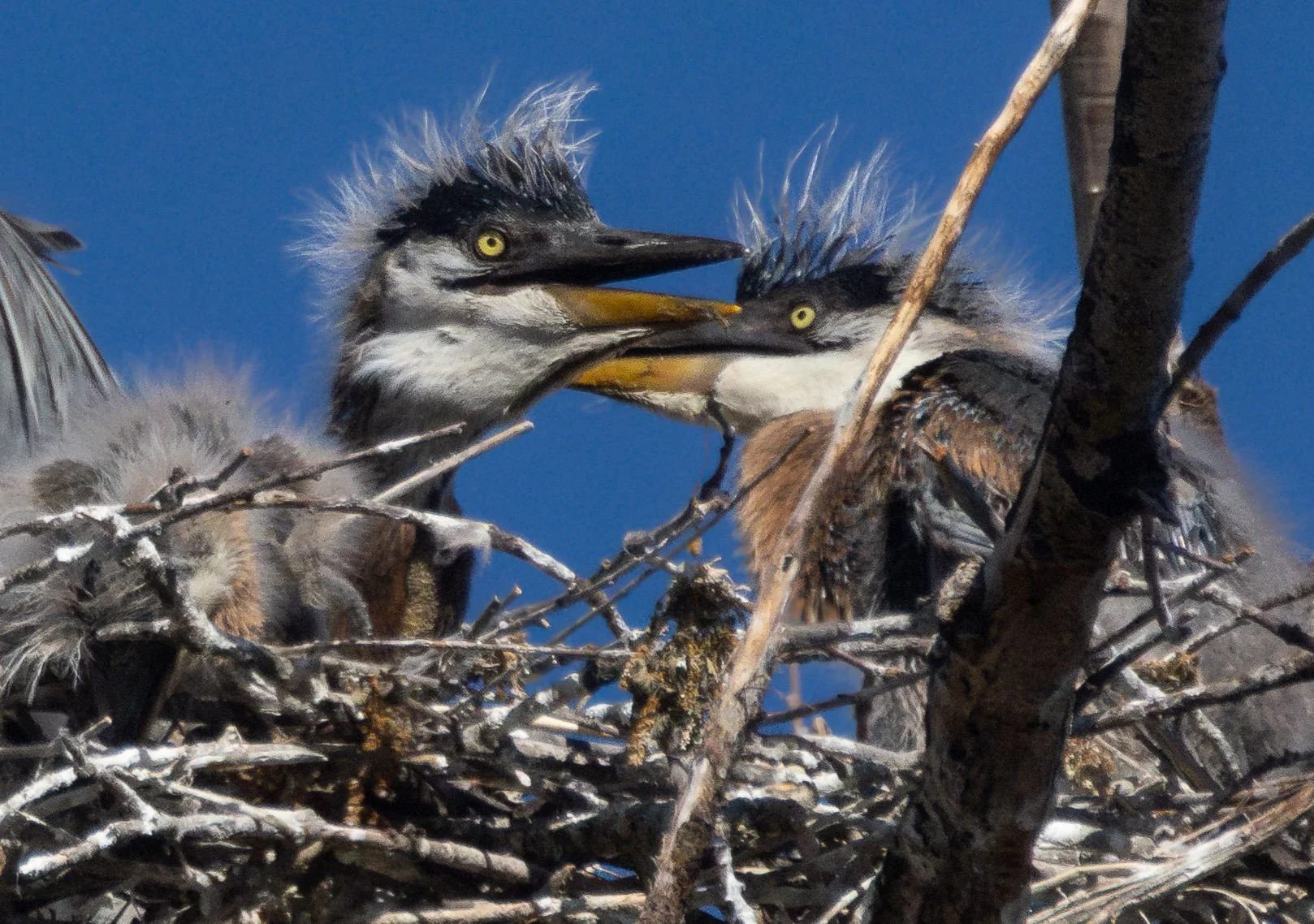
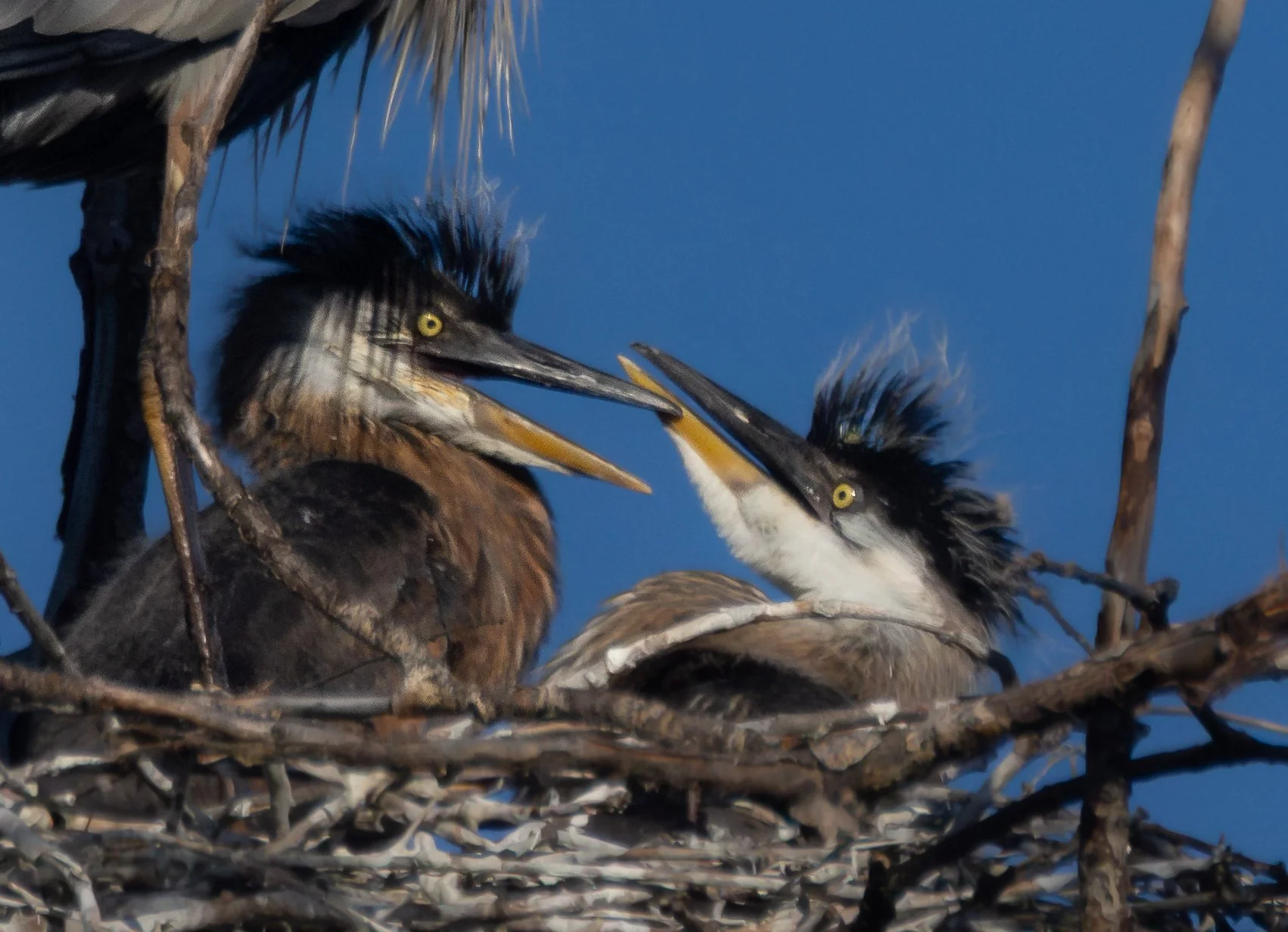
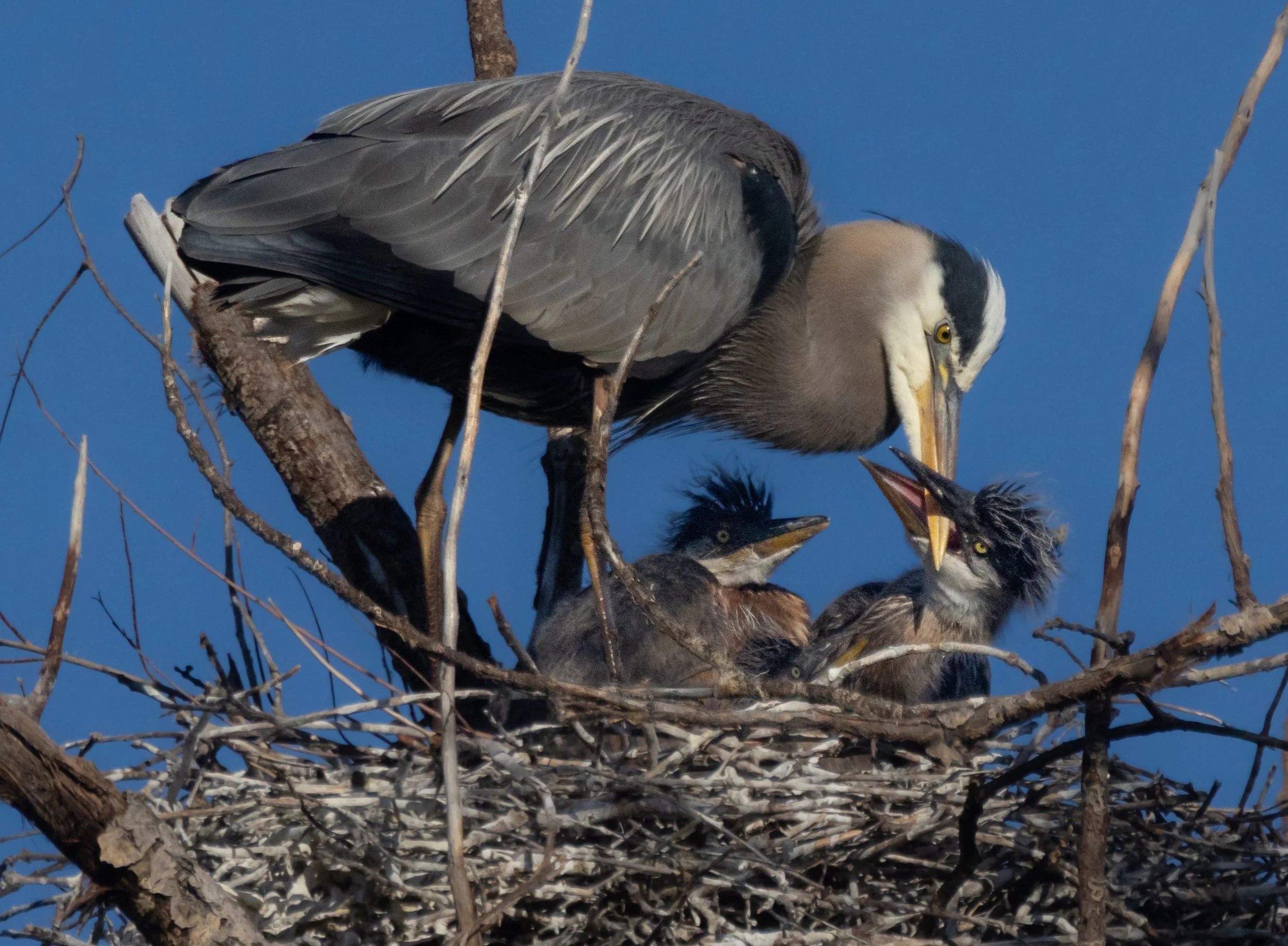
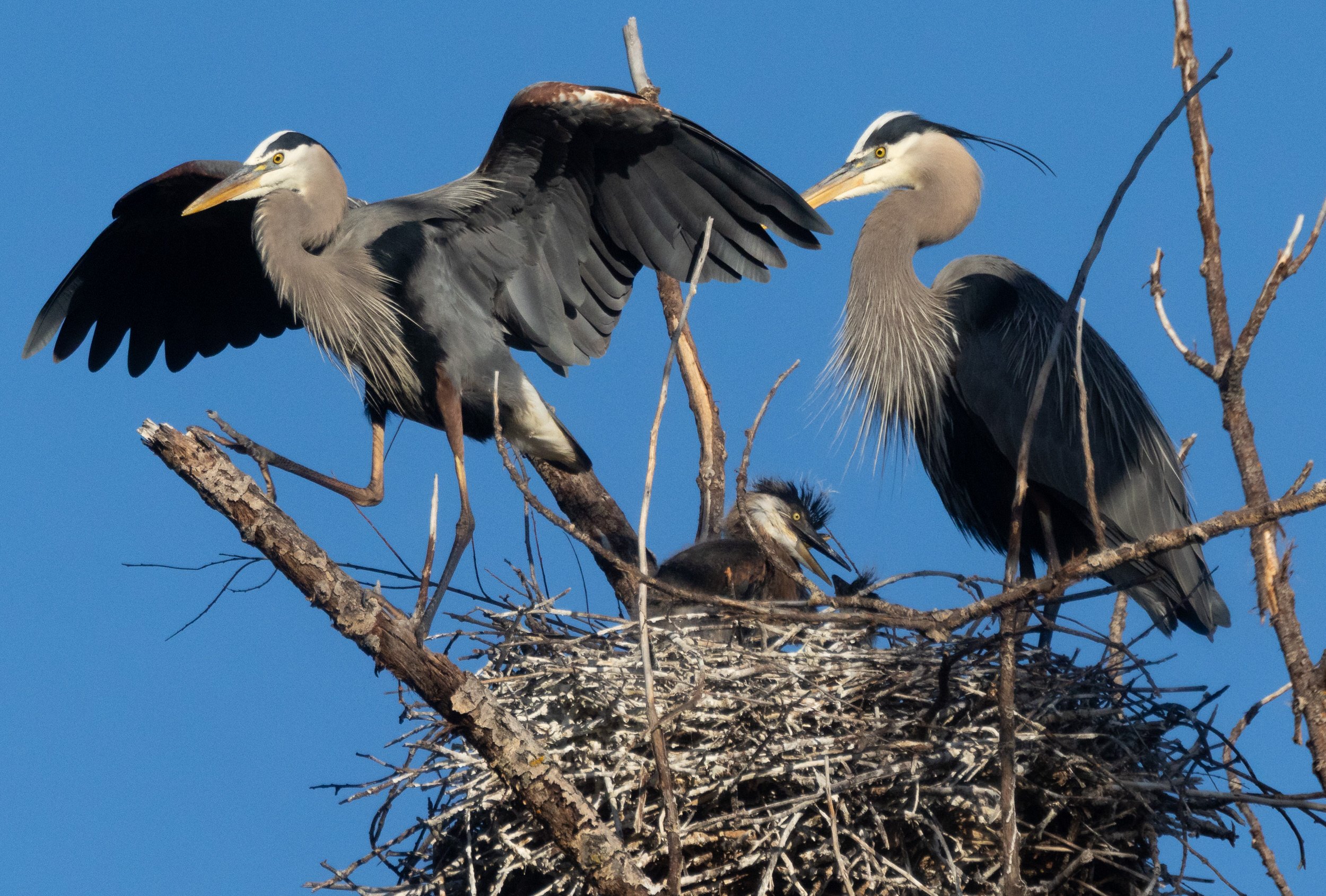
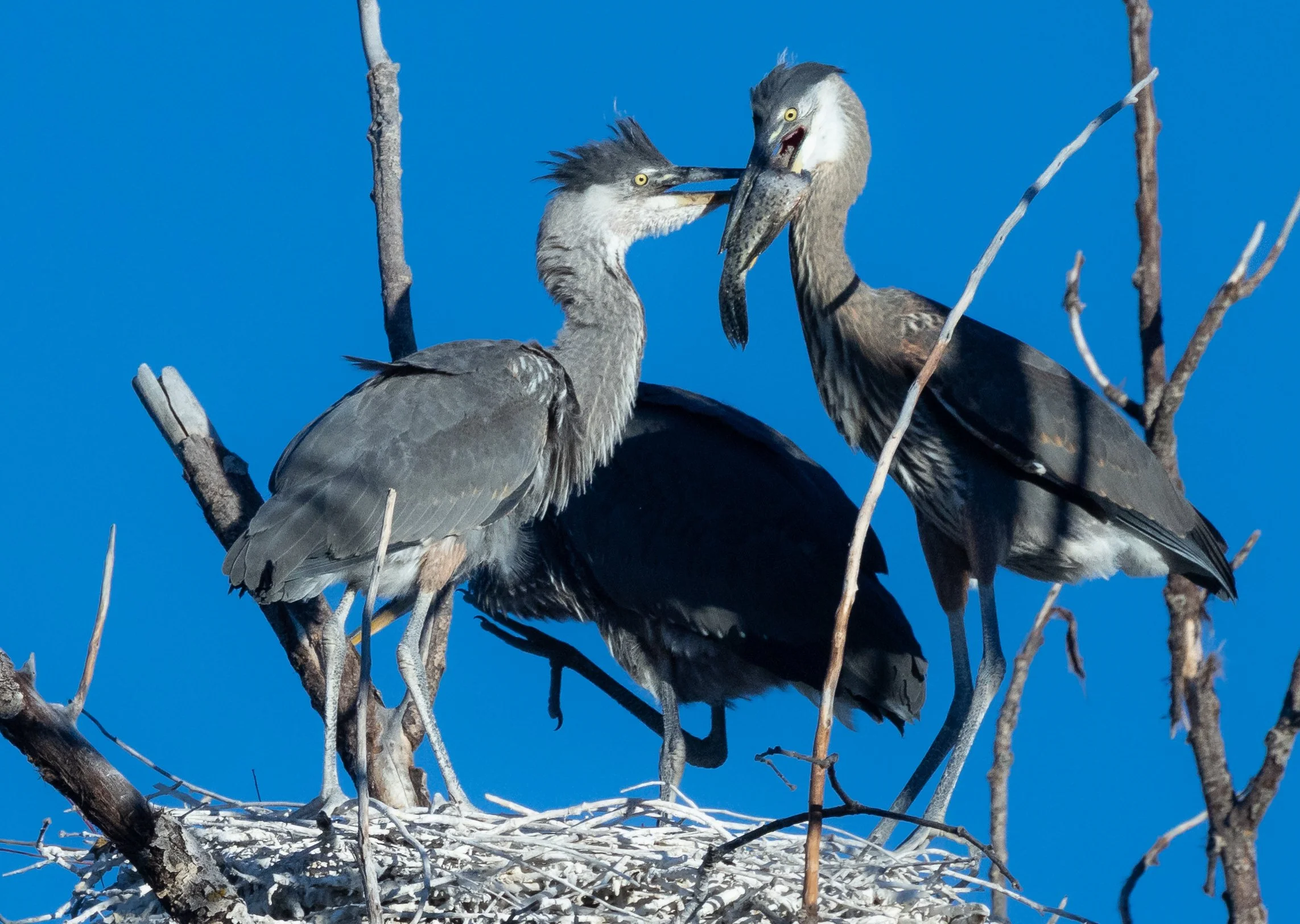
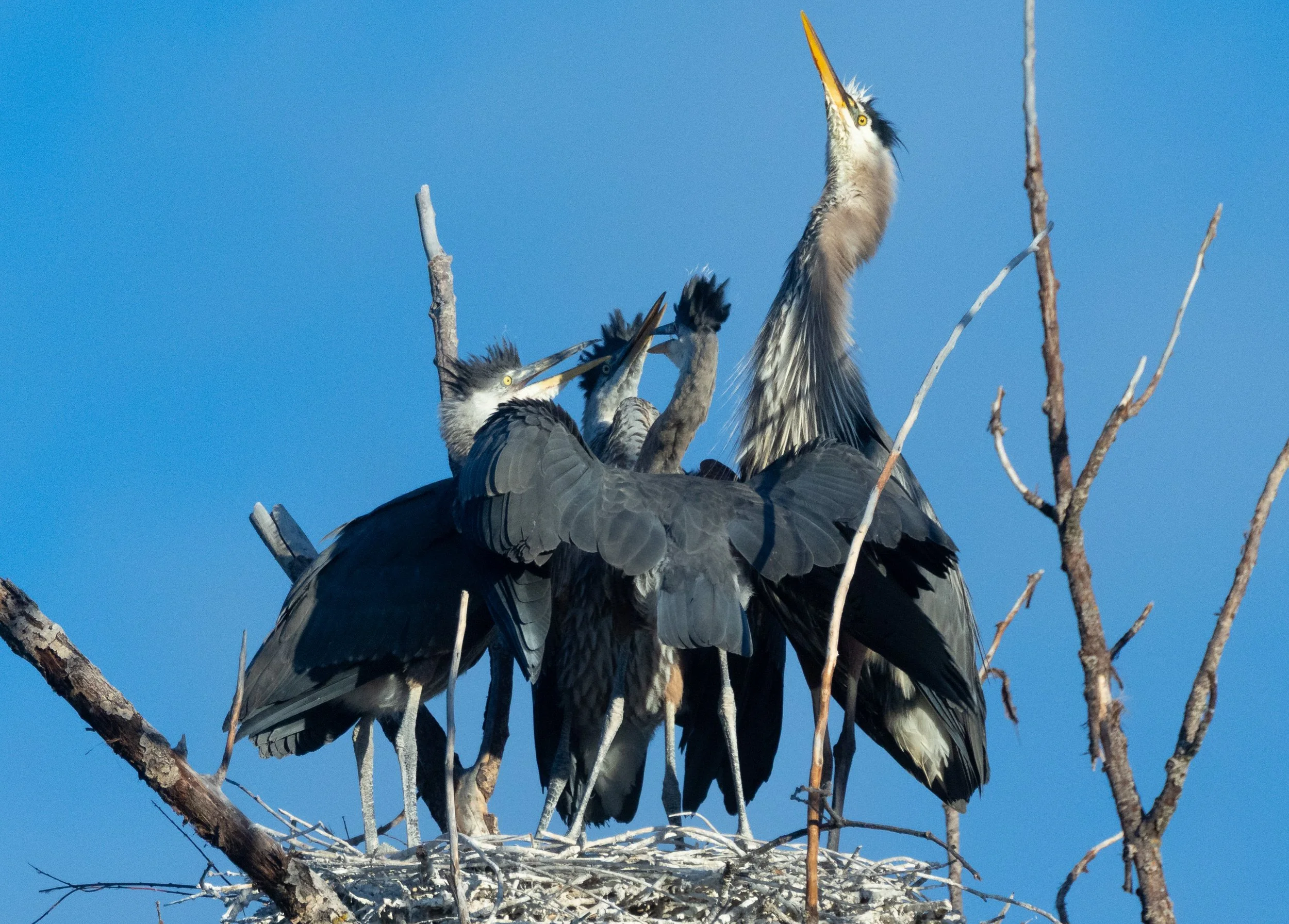
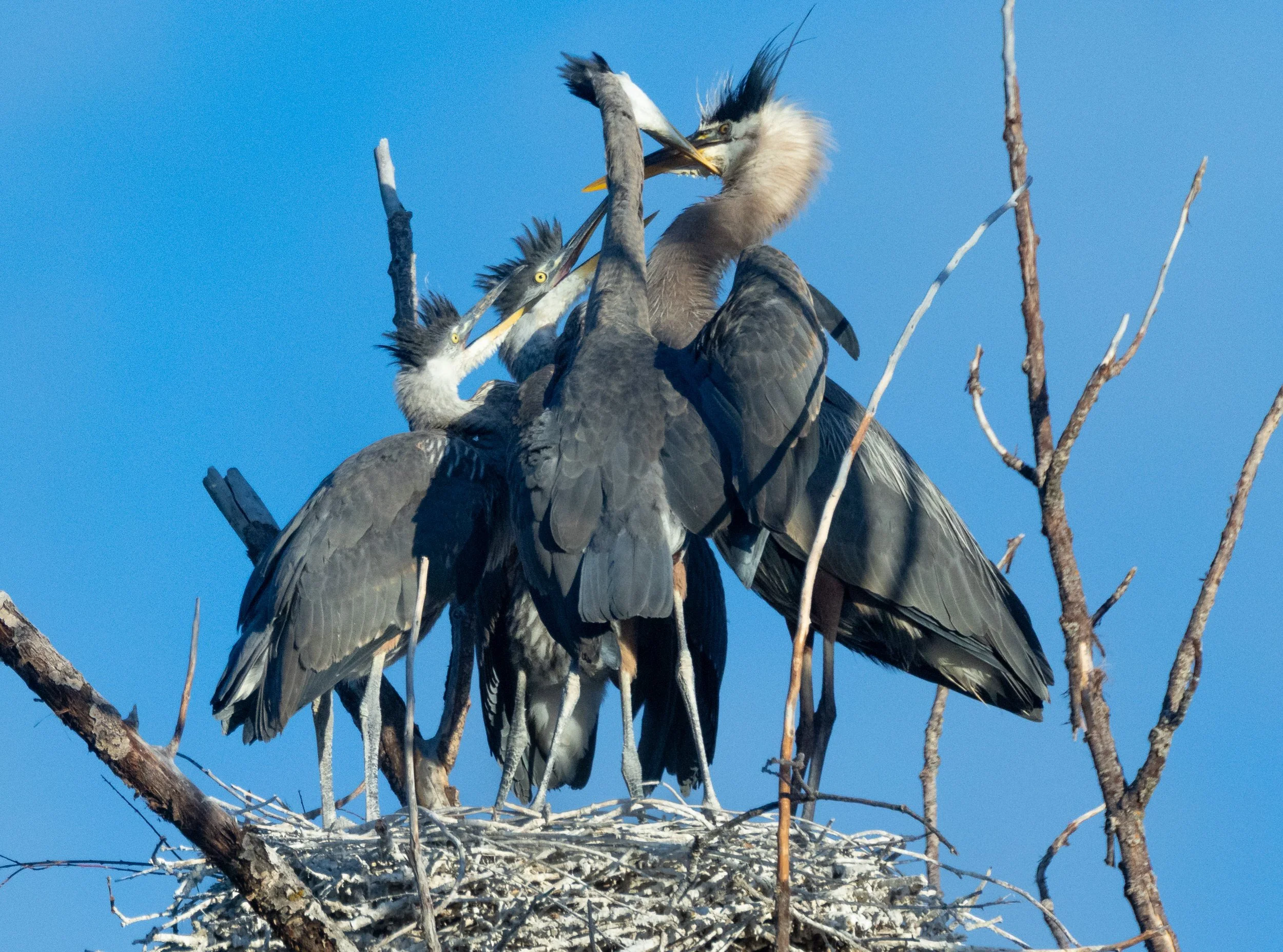
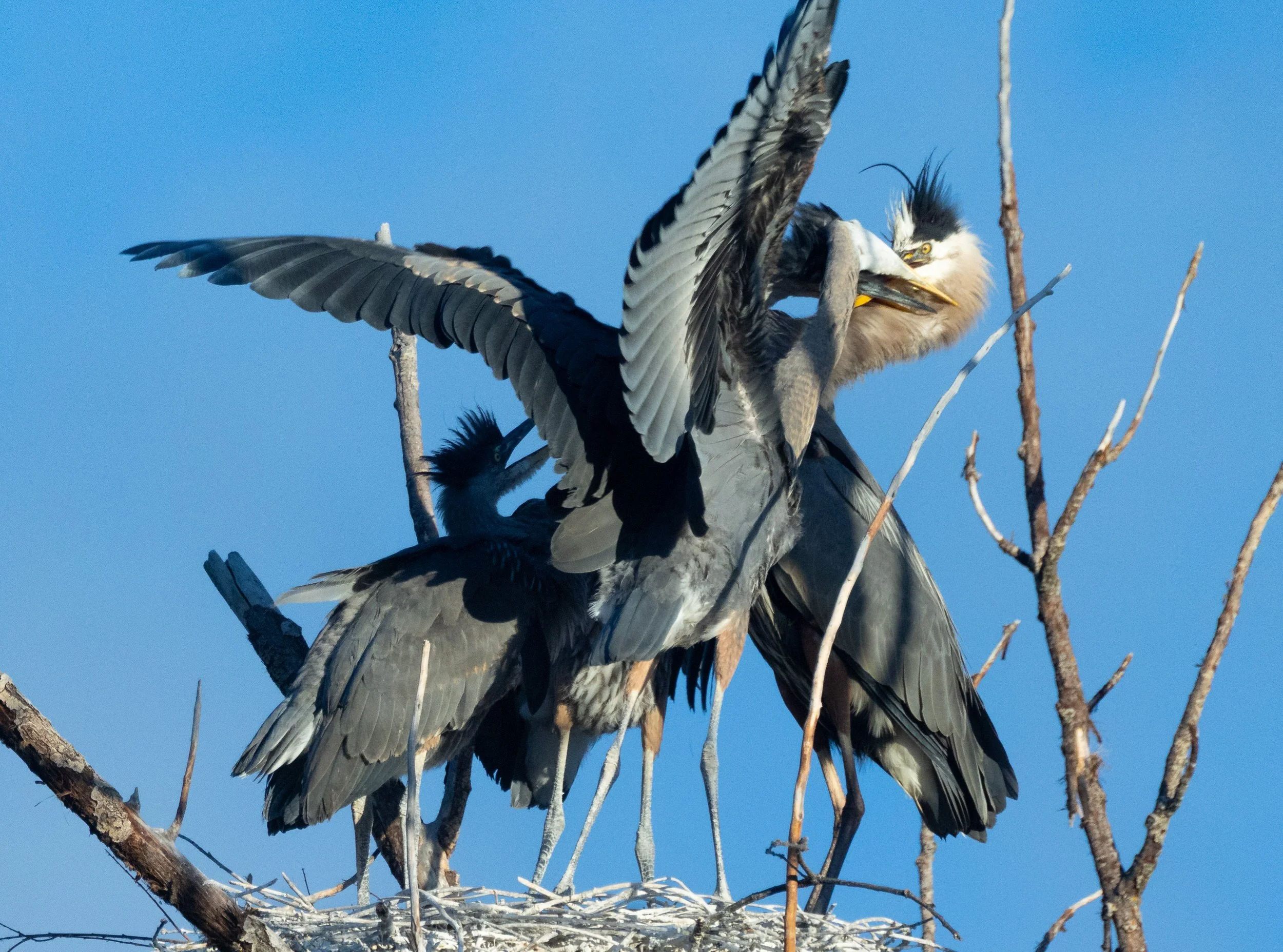
The young birds are usually ready to fly at 60 days after hatching and will begin to leave the nest around that time. To prepare for takeoff, the fledglings spend multiple days in advance practicing their wings. They stand tall on the nest or on a nearby branch, outstretch their wings, and flap them as vigorously as possible, sometimes so strongly that the whole tree shakes. Then, one brave fledgling, when he or she feels ready, will jump out of the nest and fly in a circular pattern on a quick test flight and return back to the nest.
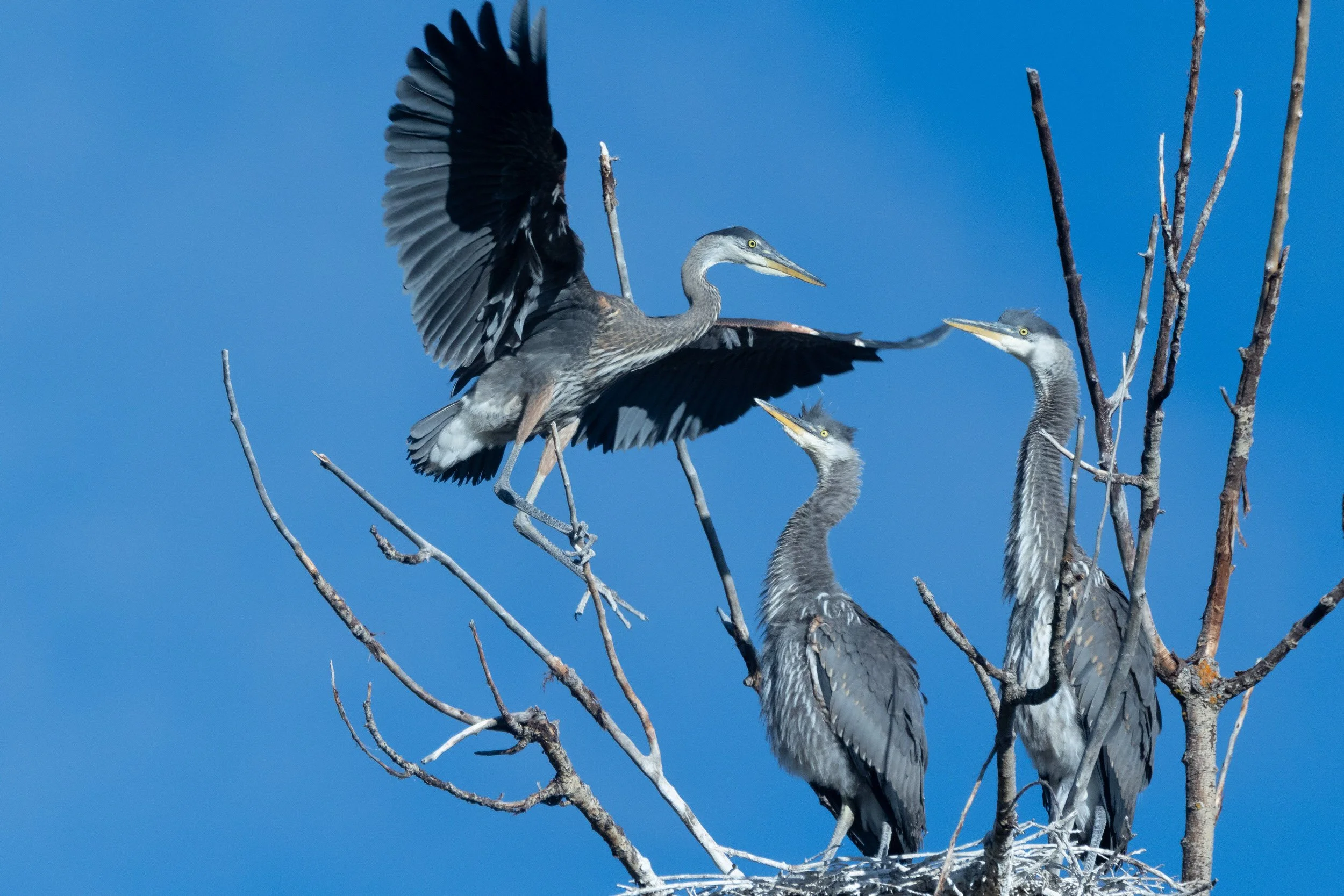
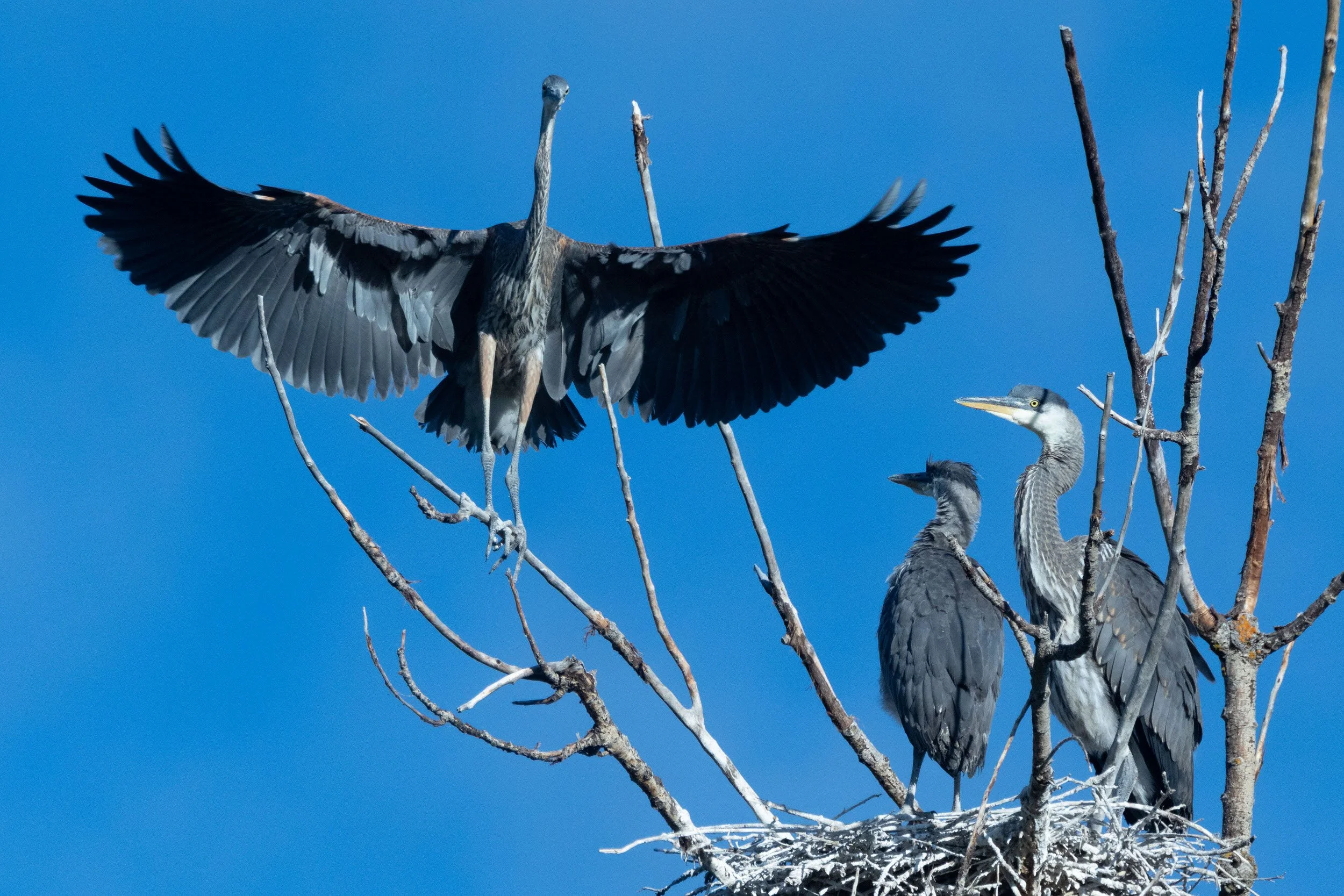
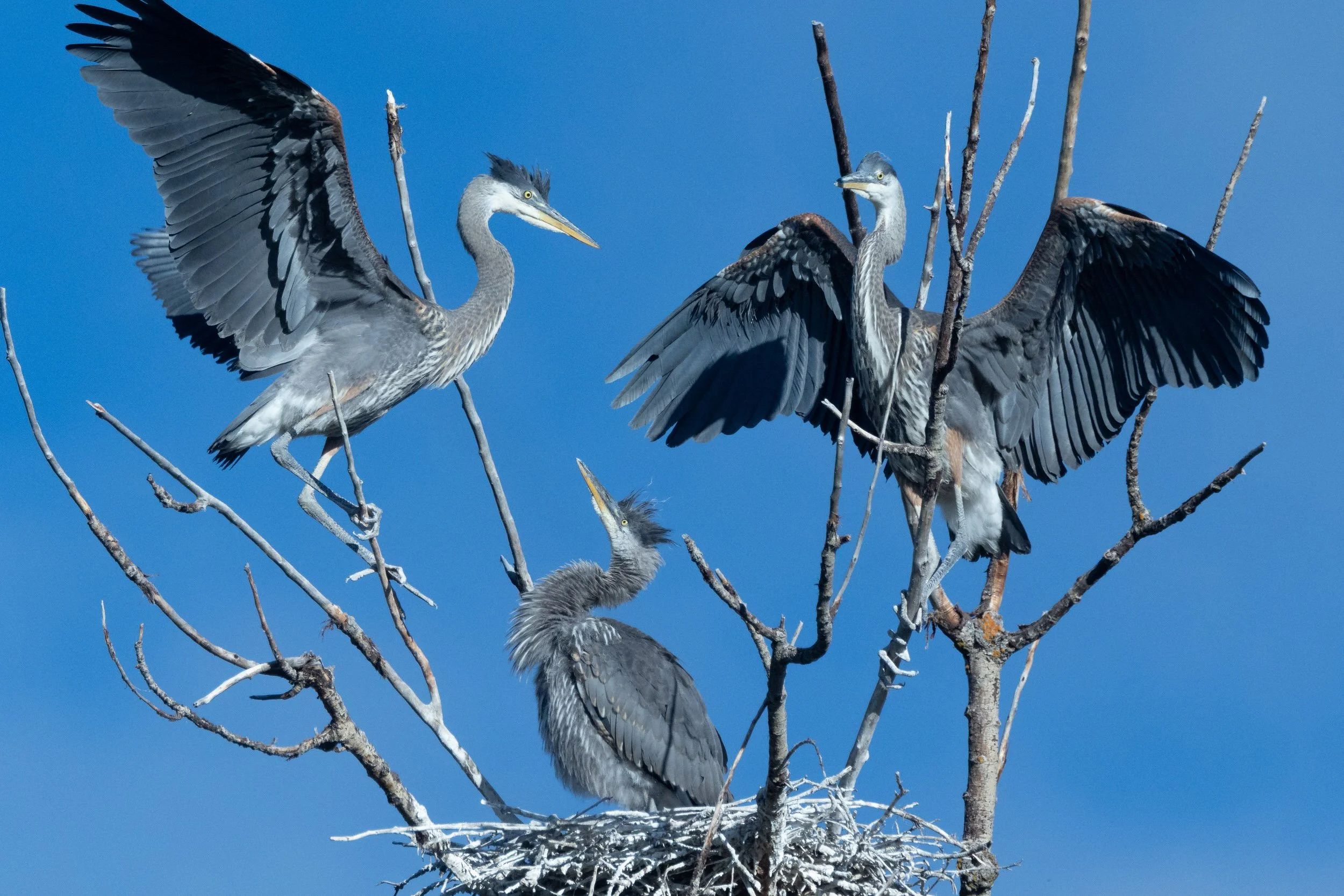
Great Blue Heron Fledglings
Preparing for Flight
Over the next few days, as each fledgling begins to fly, the parents start taking the young birds to the nearby marsh and lake where they are taught to find their own food. The fledglings quickly master life survival skills and gain their independence. Within another couple of weeks, the young birds and parents have all left the nesting site. The parents successfully raised their babies into independent juveniles in a span of about 10 weeks.
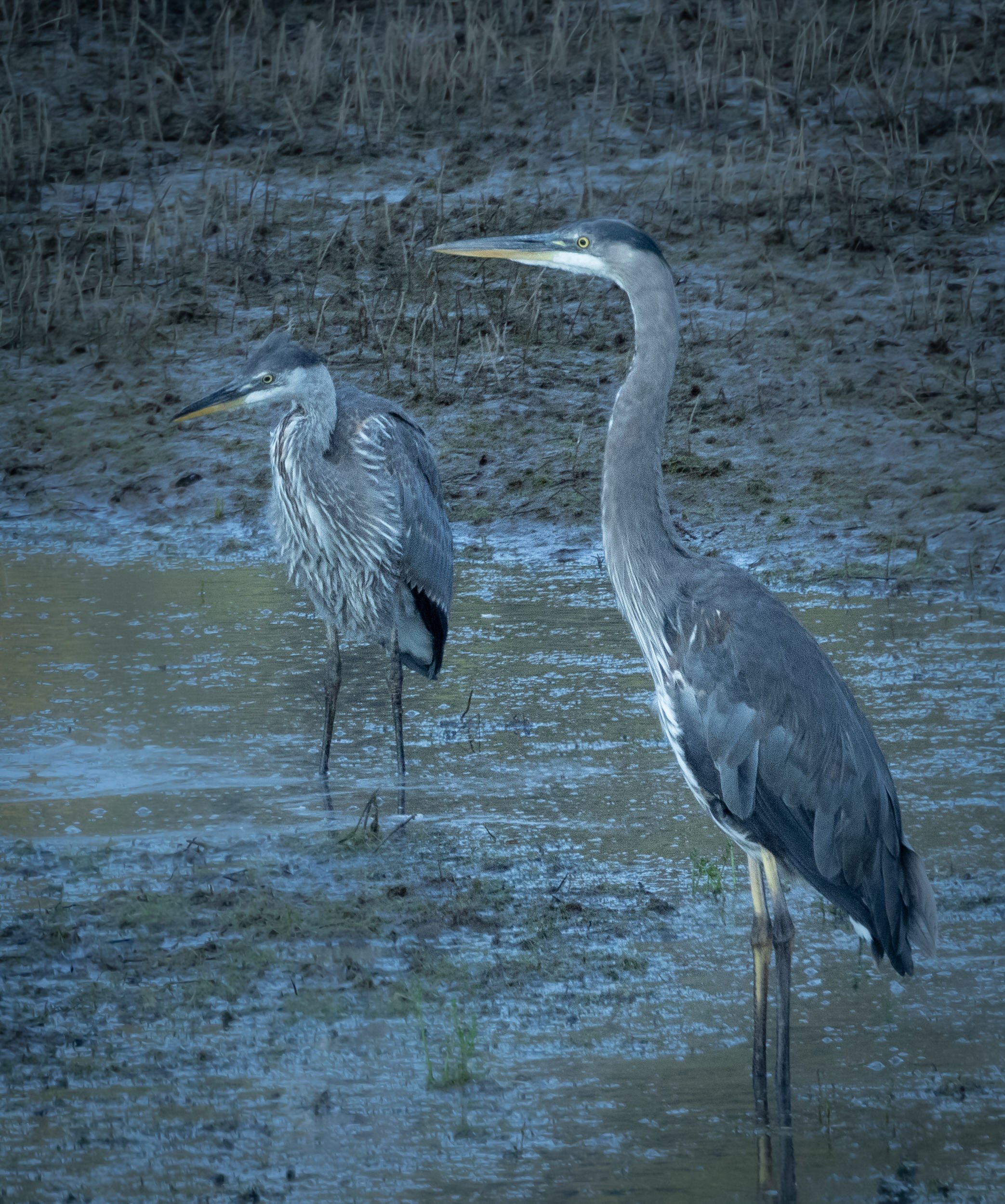
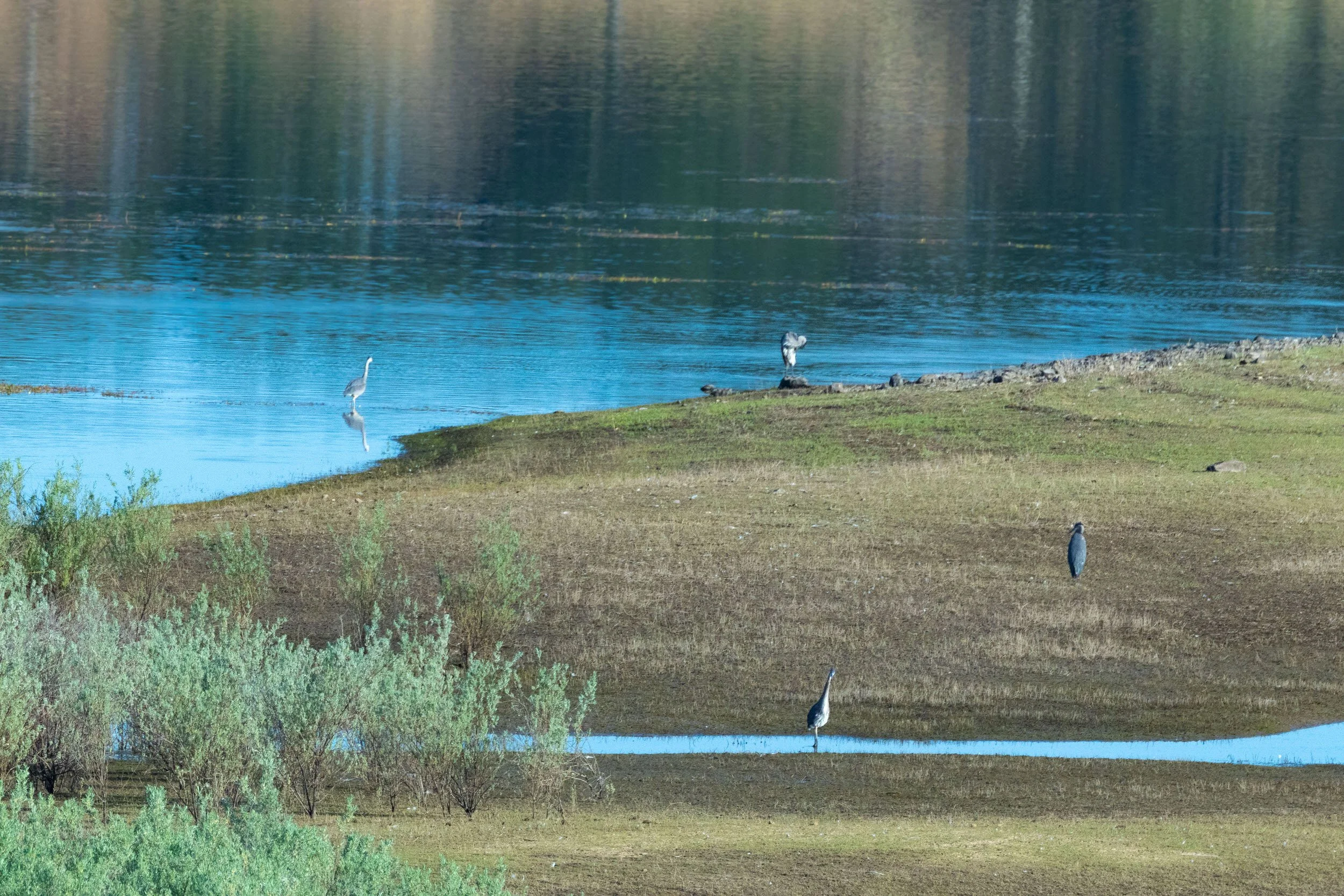
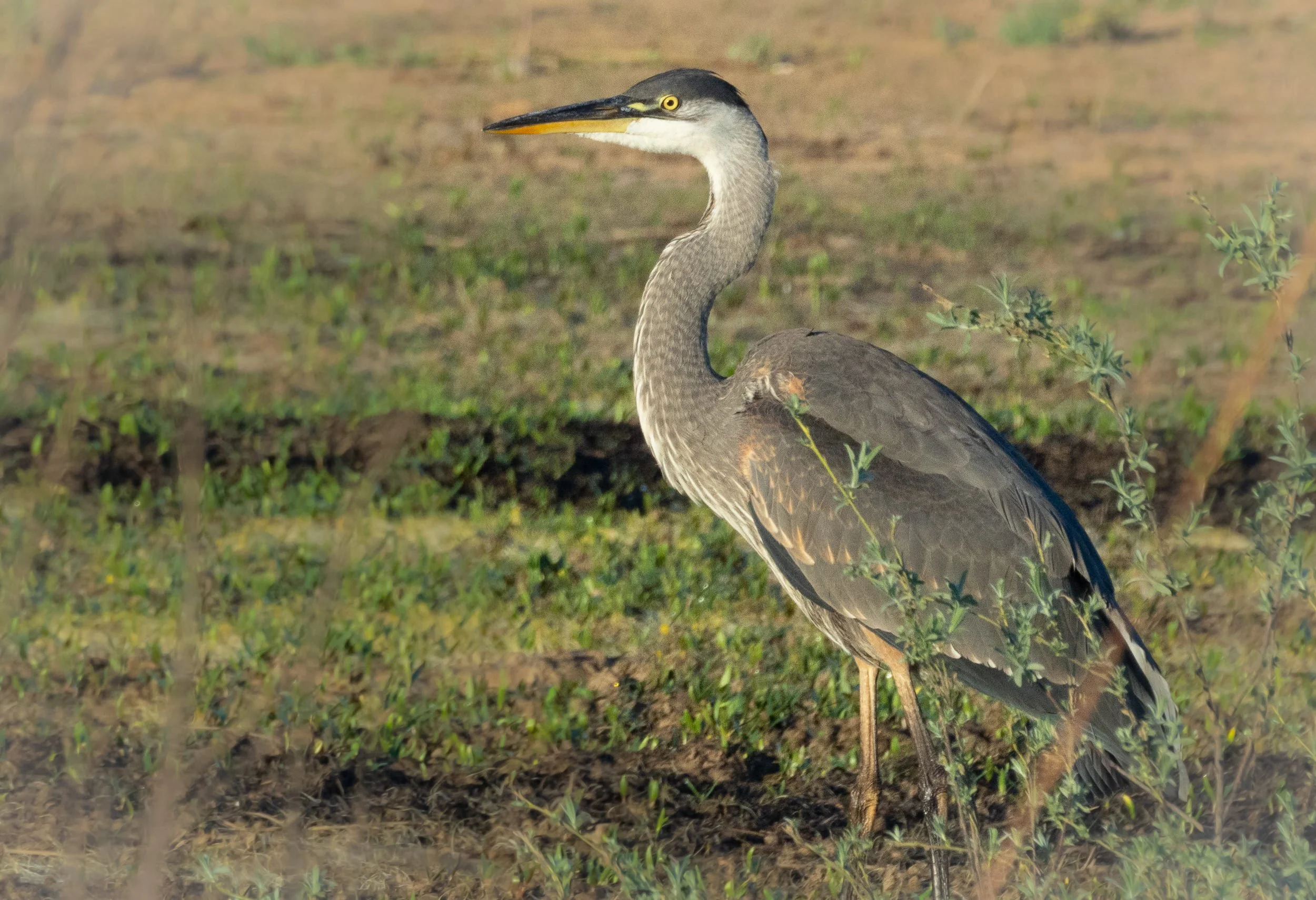
A total of 11 baby great blue herons were born at this nesting site. All 11 babies successfully grew up and left their nest.